Showing posts with label "Gallathea and Phillida". Show all posts

Monday, July 3, 2023

John Lyly, Aldous Huxley, and Student Loan Forgiveness

Curmie did his MA “by thesis” at an English university.  That is, there was no coursework involved, just a research project considerably longer than the thesis capstone to an American MA.  Curmie ended up writing about 47,000 words on the subject of “John Lyly and His Audience.” 

I hear you, Gentle Reader: “Who the hell is John Lyly?”  If you’re one of Curmie’s former theatre history students, he’s a little disappointed you didn’t at least recognize the name, but it’s perfectly forgivable if you don’t remember the context.  Lyly was the leading playwright who wrote primarily for the “boy companies” of late sixteenth-century England.  His career was ending as Shakespeare’s was beginning.

This MA project took place fortysomething years ago, and Curmie has returned to the topic only sparingly since then: I can’t be certain, but I strongly suspect that it’s been over four decades since I read any of his plays or any critical commentary on them.  I did watch a zoomed production of Gallathea and Phillida during the COVID times. 

That play is notable for its gender confusion, which makes it particularly interesting today.  The two title characters are attractive young women, played, of course, in the original production by pre-pubescent boys.  Both, like Rosalind in As You Like It and Viola in Twelfth Night a dozen or so years later, dress as men.  Neptune, you see, demands the sacrifice of the fairest virgin, so the fathers of two of the contenders for that now-dubious distinction dress them as men and send them off into the forest.  Just go with me here, Gentle Reader.

Lyly takes the bit even a step further than Shakespeare would, however, as Gallathea and Phillida meet and, both believing the other to be a man, fall mutually in love.  Of course, any kind of homosexual behavior could not be tolerated, so what to do?  Have Venus appear on the scene, of course.  The goddess of erotic love leads the two title characters off stage, promising to change one of them into a man so their marriage can proceed.  It’s a right-winger’s nightmare scenario: avoiding a lesbian relationship by the divine intervention of making one of the lovers trans! 

That same play, however, also points in the opposite direction in terms of today’s politics in the characters of Rafe the page and his brothers.  They try, and fail, repeatedly, to learn the skills required of various professions: mariner, alchemist, astronomer, etc.  The underlying message here is that people should know their place and not try to move above their station—upward mobility is not a thing to be countenanced in Elizabethan England.

The idea of staying in your own class works in the other direction, as well, in one of Lyly’s other plays, Alexander and Campaspe.  Here, Alexander the Great and the painter Apelles are both in love with the fair Campaspe.  Alexander could, of course, simply claim her as his own, but he has worlds to conquer, so he munificently gives her to Apelles (talk about a women’s studies article waiting to be written!).  The moment both reinforces the idea that class is important in both directions and, of course, parallels the Virgin Queen’s “marriage to England.”
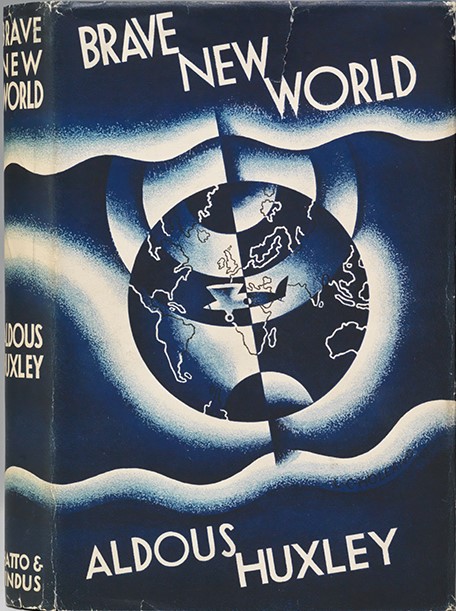
But perhaps Curmie is not alone in seeing here an anticipation of Aldous Huxley’s Brave New World, where the Betas rejoice that they are smarter than the Gammas but don’t have all those heady responsibilities required of the Alphas.  Curmie sees this being played out in the response to the recent SCOTUS ruling on student debt forgiveness.

There are two issues here: was President Biden’s plan just, and was it lawful?  Certainly those two terms are not interchangeable.  Curmie isn’t going to argue the latter consideration; he suspects that SCOTUS actually got it right in constitutional terms.  Nor is he going to suggest that Biden’s solution to the problem was the best option; he thinks it’s an over-reach.  But the impulse, the desire to at least reduce the financial and indeed emotional strain on literally millions of Americans, does not seem out of place, especially since the government cheerfully forgave close to a trillion dollars in PPP loans, mostly to people who didn’t need it.  Insert something about geese and ganders here.

Few of us have avoided misfortune or even injustice and betrayal in our lives.  There are two responses: “I went through it and came out okay [a dubious presumption to Curmie’s mind], so you can (and should), too,” or “That was awful, and I’ll do what I can to keep it from happening to you.”  Curmie need hardly mention which of these stances is adopted by the contemporary right.  This former perspective, of course, falls in the tradition of Paul Ryan, Clarence Thomas, and Rick Perry (to name but a few), as a variation on “I’ve got mine; you’re on your own.”

There are, to be sure, two variations on the theme: “I paid my way through college working summer jobs and waiting tables during the school year” and “I paid back my loans, so why shouldn’t these deadbeats?”.  Both tacks, of course, blithely ignore the reality that the world has changed.  

Some nine years ago, Curmie addressed this issue in a post entitled “Yes, A University Education Used to Be Affordable.”  Here are a couple of highlights: A student in 1978-79 who worked a full-time job for 13 weeks in the summer and 10 hours a week for 30 weeks during the school year, all at minimum wage, would make enough (before taxes) to pay 101% of total cost of attendance (not just tuition and fees) at in-state rates at the average 4-year state university. In 2011-12, that figure was down to 36.4%.

At the university from which Curmie recently retired, the average student loan debt at the end of four years would have been more than covered in 2011-12 if only two things had happened since ’78-’79: the minimum wage had kept pace with inflation, and state funding as a percentage of the university budget had remained the same. But neither of those things came close to transpiring.

Curmie promises (well, OK, maybe “hopes”) to update this piece in the near future, but suspects the situation has grown even more dire. 

The response from the right: “Well, lower your expectations, you not-rich student.  Forget about following your dreams and accept your lot.”  Curmie can’t speak for you, Gentle Reader, but Curmie heard all the way through elementary school and beyond about how one of the promises of the American Dream was upward mobility.  Now, the very people who were using that as an example of American Exceptionalism in Curmie’s youth are exposing it as a myth and actively seeking to quash the very idea that someone whose family has modest means might enter the workplace on firm financial footing (well, unless they’re 6’8” and have a good jump-shot).

If you, Gentle Reader, think this attitude sounds strikingly like “know your place, Betas,” you’re not wrong… but actually Huxley’s dystopian vision pales in comparison to 21st-century right-wing rhetoric.  At least the world inhabited by Bernard Marx delineated between the classes on the basis of their own skills and capabilities: the Alphas really were “better” than the Betas, who were “better” than the Gammas, etc.

What today’s right-wing pols and their adherents seek in this instance is not remotely merit-based, but founded solely on a student’s parents’ wealth.  Thus, the very people rejoicing at SCOTUS’s elimination of Affirmative Action, proclaiming that this will ensure that the best-qualified applicants will be accepted, are making damned sure that isn’t true: that spots, even at the most modest of four-year institutions, are reserved for those who can afford it.  There are, no doubt, tens of thousands of promising scholars—potential doctors, scientists, teachers, you name it—who, perhaps wisely, have decided not to take on the long-term debt associated with a college education.

It's also worth mentioning that these folks tend to think of business (of course) and the STEM disciplines as the only real courses of study.  Presumably this lessens the damage caused by the status quo because these graduates will be entering a lucrative field, so the repayments won’t be as crippling.  Curmie, who has not received a paycheck in the last half-century as other than an educator or theatre artist (oh… wait… there was that $75 honorarium from the county arts council fortysomething years ago), dares to suggest that there are professions requiring a college degree that are just as essential as marketing managers or plastic surgeons, but don’t pay as well.

Finding a way to encourage (or at least stop discouraging) the best candidates to move forward in their chosen profession helps us all.  If I, or someone I love, needs a doctor, I’d very much prefer that the physician in question is the one with the best aptitude for the job, not simply the best who had a rich Daddy.  Moreover, the money saved by loan recipients will actually stimulate the economy by being spent on goods and services, unlike tax breaks for billionaires, who just throw another few million bucks into their tax haven in the Caymans.

As you might guess, Gentle Reader, although Curmie is no fan of the Biden plan or of end runs around Congress, he’s more than a little pissed off at those who, having gotten their piece of the pie, show contempt for those who might also want a small morsel. 

Curmie comes by his name honest.

Sunday, March 26, 2023

What Do Agatha Christie and the Bible Have in Common?

Perhaps you will recall, Gentle Reader, the brouhaha generated by the professional hand-wringers at Puffin when they decided that it was absolutely necessary to make literally hundreds of changes to the works of the great children’s book writer Roald Dahl. Shortly thereafter, the target switched to the James Bond series by Ian Fleming. 

Agatha Christie (1890-1976)
Curmie wrote about those two excursions into corporate censorship in multi-topics posts here and here. That more such inanity would follow was certainly predictable. And now we’re there. The latest author to be bowdlerized is 
Agatha Christie, of all people, and the latest culprit is HarperCollins. 

This one hits closer to home. Curmie doesn’t recall ever having read any of Dahl’s books—if he did, as a child, he found them unmemorable—and he’s certain that he never read any of the Bond books. He’s seen a bunch of the movies, but that’s a separate issue. Agatha Christie’s books, however, were never in short supply at Chez Curmie when he was a teen. Curmie’s Mom was a huge Christie fan, and Curmie followed in her footsteps. 

There may be a Christie book or two that Curmie hasn’t read, but there certainly aren’t many, and he’s seen the overwhelming majority of the film and television adaptations, as well. Hercule Poirot, Miss Marple, Tommy and Tuppence, Mr. Parker Pyne… yeah, Curmie is there.  The plays, too, of course: The Mousetrap, Witness for the Prosecution, Verdict...

Sure, there are a couple of phrases here and there that might raise an eyebrow—for example, the original title of the book now marketed as And Then There Were None was Ten Little Niggers, and it was sold in this country as Ten Little Indians for several years (Curmie first read it under this latter title). But the texts themselves, apart from reflecting some of the attitudes of the time in which they were written, aren’t terribly problematic. 

Enter the “sensitivity readers,” a collection of easily-triggered snowflakes. They are apparently paid very low wages, thereby suggesting to Curmie that one of two things must be true: that publishers aren’t really concerned with intelligent decision-making, or that no one who could command a better salary would take the job. Perhaps Curmie is not alone in noting the parallel to the qualifications of the people in this country who grade the essay sections of standardized exams. 

Significantly, the decisions are often haphazard at best: the Fleming books, for example, have been edited to eliminate racial slurs against blacks, but the sexism, homophobia, and slurs against Asians remain. If you’re going to be a censorious asshat, at least be consistent! And, frankly, if the edits listed in the Guardian article linked above are representative of the whole of the project, then the entire operation evokes Gertrude Stein’s commentary on Oakland: there is no there there. (Note: the original reporting on this story came from the Telegraph, but it’s behind a paywall, and Curmie isn’t interested in going down that particular pathway.) 

References to race are eliminated; even calling a character “black” or “Jewish” is apparently now verboten. A passage in Death on the Nile which originally read “they come back and stare, and stare, and their eyes are simply disgusting, and so are their noses, and I don’t believe I really like children” has been edited as you see here. An intelligent reader, unlike a “sensitivity reader,” would suggest that the phrases that were cut tell us something important about the character speaking, and are not at all defamatory about the children thus described. 

Even a description of a character’s “lovely white teeth” has been axed. Don’t even bother trying to find a reasonable explanation for that one, Gentle Reader, as you’re more likely to find Sasquatch enjoying a cup of tea on your neighbor’s porch. The utter absurdity of this entire operation is laughable… or, rather, it would be if we weren’t so conscious of seeing the thin edge of the wedge. It might also be worth noting that HarperCollins has apparently been doing at least some of this for a couple of years already; they can’t have been very proud of doing so, or we’d have known long before now. 

The Christie story wasn’t the only one that crossed Curmie’s path in the last 24 hours, however. Curmie has long argued that the left and the right are equally interested in quashing freedom of expression; they just use different methods. (Curmie’s most recent rant to say this explicitly is here.) 

For every university that demands agreement with so-called “anti-racist” dictates from an applicant wanting to teach chemistry, there’s a GOP legislator trying to ban discussions of anything that might make slavery look like something worthy of mention in a history class, or to pull books from the school library because they reference homosexuality. The most recent silliness about Michelangelo’s David isn’t indicative of all conservative thought, but neither is it an outlier. 

Of course, many of the bills that emanate from conservative legislatures or school boards are crafted more to generate approbation, votes, and campaign contributions from True Believers than to actually do anything. Thus, Florida’s “Don’t Say Gay” bill doesn’t, in fact, specifically reference gay relationships, but the smarmy Ron DeSantis’s brainchild cannot be both constitutional and effective, as Peter Greene points out in a recent piece that is excellent, even by his standards. 

The problem is, it’s almost impossible to craft legislation that prohibits what you want excluded without also prohibiting something you don’t want to lose. Outlaw drag? Well, there go a host of classic movies (“Some Like It Hot” is at the top of the list, but hardly alone; all those versions of Peter Pan with the title character played by a woman would have to go, too). 

Let’s consider, also, the two Shakespeare plays Curmie has directed. In the original production of Macbeth, boys played (female) witches who had beards. There’s some drag in there somewhere! As You Like It is even more fun, as we get a boy playing a girl playing a boy playing a girl. Curmie knows of not a single critic who denies that the sexual ambiguities at play are central to the play’s appeal. 

In Gallathea and Phillida, one of the better-known plays by John Lyly, a just-prior-to-Shakespeare English playwright (and subject of Curmie’s MA thesis), the cross-dressing of the title characters confuses them both to the point that they fall in love. They’re both women, by the way (well, the actors were pre-pubescent boys, but…). 

The situation is resolved by none other than Venus herself, who promises to change one of them into a boy so they can continue their loving relationship. Avoiding the “L” in LGBTQ+ by making it a “T.” You gotta love it! No, Curmie doesn’t think this play will (or, frankly, should) be taught to schoolkids, but he’s mischievous enough to want to see it happen. 

Predictably, Utah was one of the states that was most concerned about students’ access to written materials the legislature didn’t want reading. HB 347, passed last year, reads in part that “A public school may not… adopt, use, distribute, provide a student access to, or maintain in the school setting sensitive materials.” 

“Sensitive materials” in this context means an instructional material that is pornographic or indecent.” Utah pols are righteously indignant that anyone would suggest that their book-banning exercises are… you know… book-banning. State Senator John Johnson, for example, insists that they’re just interested in protecting the innocence of children. 

Ah, but, as usual, excluding everything you want to exclude while not forbidding what you don’t want to forbid requires language skills surpassing those of the average state legislator. According to Utah law, there’s a long list of what constitutes “a description or depiction of illicit sex or sexual immorality.” You can pretty much guess what’s there, Gentle Reader, or you can click on the link. 

The key interpretation of how these laws apply is that of Michael Curtis, general counsel for the Utah Legislature. He states that in the case of indecency, a book doesn’t need to be “taken as a whole”… or left on the shelf during a review. If there is a scene involving any of those acts, according to HB374, it should be immediately removed. 

That would be a big “oops,” there, Mike, because it brings us (finally) to the news story referenced a few paragraphs ago: an ostensibly irate parent has demanded that the Bible be removed from school libraries, as it is “one of the most sex-ridden books around.” Accompanying the request was an eight-page listing of allegedly (let’s be real: not just “allegedly”) offensive passages from the Bible. 

The complainant wrote: “Incest, onanism, bestiality, prostitution, genital mutilation, fellatio, dildos, rape, and even infanticide…. You’ll no doubt find that the Bible, under Utah Code Ann. § 76-10-1227, has ‘no serious values for minors’ because it’s pornographic by our new definition.” 

Thing is, it’s true. And we’re not allowed under the law to argue that the book as a whole has redeeming value. There is no legal argument to allow the Bible to remain available to minors within a school environment in the state of Utah. A lot of other classic literature would have to go, too, but let’s start there. 

Curmie seriously doubts that the parent involved, if indeed it even is a parent, really thinks the Bible ought to be banned. It’s a gimmick. The petitioner even pretty much admits as much:
I thank the Utah Legislature and Utah Parents United for making this bad faith process so much easier and way more efficient. Now we can all ban books and you don’t even need to read them or be accurate about it. Heck, you don’t even need to see the book! Ceding our children’s education, First Amendment Rights, and library access to a white supremacist hate group like Utah Parents United seems like a wonderful idea for a school district literally under investigation for being racist.
Whether these accusations have merit may be up for debate. What is not, is that book-banners are going to face opposition like this at every step of the process, and that there is no honest or even legal way out of the bind into which they’ve thrown themselves. That doesn’t mean they won’t escape through corrupt and selective enforcement (which was the intention all along, after all), but they’ll sure as hell reveal their censorial predilections in the process. 

Curmie has no problem with a local school restricting access to certain books to students of a certain age in the absence of parental consent. But here, we’re talking about the state butting into a local school’s business and demanding the removal of books to which the local community and/or a particular student’s parents have no objections. So much for the GOP being the party of individual freedom. 

Whether the target of the sanitizers and bowdlerizers is Death on the NileJames and the Giant Peach, The Bluest Eye, or Gender Queer, we all know that unless the censorial forces are stopped, they’ll only get more aggressive. Next on the list might be Madame Bovary, or Love in the Time of Cholera, or The Laramie Project... or, frankly, virtually anything at all written more than a generation or so ago. None of these are good options. It’s time to stand up to the suppressors and the censors, the hypersensitive and the prudish, the craven intellectuals and the intellectually craven. Now.