Showing posts with label freedom of expression. Show all posts

Friday, June 16, 2023

Strange Bedfellows: Socialism and Free Expression

From Roger Waters’s concert in Berlin
Reading Jack Marshall’s piece on Ethics Alarms about the Gallup poll that suggested an increase the percentage of Americans who self-identify as conservative, my first thought was, “so where do I fit in this model?”. 

There are so many variables: Curmie is quite liberal on some issues, staunchly conservative on others. I took a couple of those online quizzes: according to Pew, I’m “Ambivalent Right” (whatever that means); according to politicalpersonality.org, I’m a “Justice Warrior” (erm… no); ISideWith has me as a Green (I’m not, really, although I’ve been accused of worse). 

Moreover, such things are always relative: there’s no doubt that I’m well to the left of most people in my Congressional district, for example, but I’m a fair distance to the right of many of my colleagues in academic theatre. Moreover, times change. My once-radical position on gay rights, for example, is now rather mainstream: my belief system remained virtually unchanged, but it’s now no longer “very liberal,” and may even be “moderate.” 

Most importantly, distinguishing between left and right isn’t always the appropriate axis. Sometimes it’s the continuum from authoritarian to libertarian that really matters. Political Compass places me solidly to the left of center, but even further into libertarianism. 

In other words, my longtime assertion that, to quote the title of a piece I wrote a few months ago, “The Left and Right Both Hate Free Expression—They Just Do It Differently,” ought not to surprise us overmuch. What might is a casual observation I made while doing a little research for my second of my two posts on the Roger Waters controversy. 

Something clicked in my mind when I read a denunciation of the US State Department’s weighing in on the subject. An article entitled “Oppose the State Department’s slanders against Roger Waters!” appeared on… wait for it… The World Socialist Web Site, under the auspices of the International Committee of the Fourth International (ICFI). 

Given that site’s previous condemnation of “bourgeois politicians and the media” and the “shabby political elite” who denounced Waters’s concerts in Germany, this may be understandable. From the perspective of the WSWS, the opposition to Waters comes, in fact, from the right, because, as a WSWS review of the Detroit stop on the American tour argues, “Virtually every song is directed toward pressing issues of our time: imperialist war, fascism, the poison of nationalism, the plight of refugees, the victims of state oppression, global poverty, social inequality, the attack on democratic rights and the danger of nuclear annihilation.” 

The photo you see above suggests that the socialist defense of Waters may be founded at least in large part on political rather than free speech grounds. Were one of a cynical disposition (ahem), one might also suspect that such displays may also underlie the State Department’s intrusion into the kerfuffle. To be clear, every US President since Reagan was thus labelled: it’s not just Biden who got this treatment. 

So perhaps the socialists are defending Waters because they see him as one of them. Some of their rationale is, to say the least, rather strained, even to the eyes and ears of someone (like Curmie) more likely than the average person to see their argument in a positive light. That said, they are very specific that the attempt “to destroy Waters and intimidate other artists, performers and intellectuals from speaking out… is a desperate and systematic attack on freedom of speech and artistic expression.” Curmie agrees. 

More to the point, it doesn’t, or rather shouldn’t, matter if Waters is “right” about the issues. Do I think he’s absolutely accurate about some issues? Yes. About all issues? Hell, no. Is he antisemitic? I don’t think so. Is there any reason he ought not to be able to perform even if he were? No. 

What really caught my eye in all this was the fact that a Socialist organization was willing to take a stand for freedom of expression, but I can find no evidence that any other government official or political party has been willing to do so. There are politicians in the US, the UK, and Germany ready to condemn him for what I believe to be utterly imaginary offenses that tell us more about the spectator than the artist. But to the best of my knowledge, there’s not a single defense by any politician or political organization… except the Socialists. 

Anyway, I then recalled the case of Bright Sheng, the University of Michigan professor who got into hot water a couple of years ago for showing his class the Laurence Olivier film version of Othello.  

In that case, the Censorious Asshats (the usual hat-tip to Ken White of Popehat for the felicitous phrase) were clearly on the left, with the (alas!) usual genuflections to grad students (!) who were “hurt” by the incident. Eventually, sanctions against Professor Sheng were dropped, but the damage to his reputation was both undeniable and irrevocable. 

At the time, I’d either never seen the film in question or seen it so long ago I’d forgotten it. I watched it a couple of months ago, and no, I wouldn’t show it to students except if it were heavily contextualized… but not for the reasons that got Sheng into trouble. The casting of a white man in very dark makeup is a little unsettling at first, but what was really appalling was the Olivier himself was furniture-chewingly awful: bad enough that strong performances by Derek Jacobi as Cassio, Maggie Smith as Desdemona, and especially Frank Finlay as Iago weren’t enough to save the film from being, well, bad. 

This, of course, is only a matter of opinion and ultimately neither here nor there with respect to the Sheng case. What matters in the present circumstance pertains to the reaction to the brouhaha. Whereas commentators on such right-leaning sights as Newsmax and The National Review took up the cause, there was no uproar that I could find from politicians or mainstream parties of any description. 

You know who did write a scathing denunciation of the university’s violation of both academic freedom and First Amendment rights? Ah, you’re ahead of me here, aren’t you, Gentle Reader? That would be the International Youth and Students for Social Equality at the University of Michigan, whose self-description includes the following: “Equality is a fundamental right of humankind, denied almost universally to the people of this earth under the economic system of capitalism. While our organization encourages various means of promoting equality, our program aspires towards a socialist transformation of society.” 

The IYSSE (don’t make me try to pronounce that acronym) posted to (where else?) the WSWS page, arguing that “The actions taken against Professor Sheng… may well rank as the most shameful episode in the University’s history.” They argue further that the university’s initial capitulation to “poorly read, miseducated and disoriented students,” not Professor Sheng’s showing of the film, is what is helping to sanction “a thoroughly toxic environment on university campuses.” Those socialists aren’t pulling any punches! 

None of this is to suggest that socialists are universally champions of freedom of expression. Far from it, in fact. But at least we might start considering that other axis on Political Compass’s map. The libertarian streak missing from too many pols on the left and right alike seems not (yet?) to have been abandoned by self-identified socialists.  (Leftist Democrats are, of course, a different story.)  In these two instances, at least, they not only supported someone maligned for imaginary offenses that should have been protected speech under any circumstances, they were the only voices representing a political party (as opposed to being readily identified with such a party) to do so. 

That struck me as odd. Perhaps it shouldn’t have.

Note: This piece was originally intended to start as a guest post on Ethics Alarms.  Curmie's agreement with Jack Marshall, the host of that site, was that I was free to cross-post.  When, for a variety of reasons, the article didn’t appear there for a couple of days, I went ahead and posted here.  There are a couple of stylistic changes and a typo or two have been fixed, but the substance is what I sent to Jack.  Anyway, it’s now up on Ethics Alarms.  I mention this because that site has a far better track record than this one of engendering comments and debate.  If, Gentle Reader, you would like to join in that conversation, head there.  But I can’t foresee a scenario in which I would post something there and not here.

Saturday, June 3, 2023

Roger Waters, Pink, Nazis, and Freedom of Speech

There are lots of more important issues than Curmie’s topic du jour: the fact that we have even contemplated not raising the debt ceiling; Texas’s attempting to wrest the title of Most Embarrassing State from Florida (Tennessee is still in Honorable Mention territory despite their best efforts); further incursions on freedom of expression from authoritarians on the left, the right, and the simply megalomaniacal; well, you get the picture. 

A disturbing but not illegal image.
Curmie may or may not address one or more of these issues in the days ahead, but for now, let’s talk about former Pink Floyd composer-bassist-frontman Roger Waters, who ran afoul of German police for wearing a “Nazi-style uniform” (that’s
The Guardian’s term) at a recent concert in Berlin. 

Germany, for understandable reasons, is more than a little sensitive about anything suggestive of Nazism. They take their restrictions too far, in Curmie’s opinion, but what is, is. Any display of Nazi regalia is verboten; an exception is made “for educational purposes and in artistic contexts.” 

OK, but this isn’t Nazi regalia. It is clearly intended to be evocative, but there’s a difference between a swastika and the crossed hammers of the fictive world of “The Wall.” The latter, Waters’s creation, ranks alongside The Who’s “Tommy” as the greatest concept albums of the rock era, and is the best-selling double album of all time (yes, beating the Beatles’ White Album for that honor). 

The 1982 film version featuring Boomtown Rats frontman Bob Geldof as Pink, the lead, makes the plotline clearer than the album might. The song at the center of the controversy, ”In the Flesh,” appears in “The Wall” as a hallucination: in a fit of despair, Pink imagines himself as a Nazi-like demagogue. When the nightmarish visions subside, Pink screams “Stop!”, suggesting that not only does he recognize what has just transpired as an illusion, but that he wants no part of it. He continues that he wants “to go home / Take off this uniform / And leave the show / But I'm waiting in this cell / Because I have to know / Have I been guilty all this time?” This is not in the same area code as a rallying cry for Nazism. 

Officials in Frankfurt attempted to shut down Waters’s show there before it happened, accusing the singer-songwriter of being “one of the most widely known antisemites in the world.” They failed; Waters would have us believe that the decision was based primarily on the recognition that the Pink persona was a “scathing critique” of the Nazis. Taken out of the context of the entirety of “The Wall’s” plotline, this isn’t abundantly clear, but the court did determine that the performance “did not glorify or relativise the crimes of the Nazis or identify with Nazi racist ideology.” 

Even more importantly in Curmie’s mind, though perhaps not in the German authorities’, was the determination that the performance, in character, of a song from one of the seminal albums of the past half-century, must be “viewed as a work of art,” and therefore exempted from sanction, despite its “symbolism manifestly based on that of the National Socialist regime.” 

Of course, there are ethical concerns that extend past mere legalities. Waters has indeed, for many years, been accused of anti-Semitism, largely because of his pro-Palestinian stance. This allegation has historically been based on a conflation of Judaism and the Israeli government. It is perfectly possible to oppose the latter without bearing any animosity toward the former, and there is little to indicate that Waters is incapable of making the distinction. 

Still, there is a segment in the show that highlights the names of those killed by government authorities, thereby linking Anne Frank with Shireen Abu Akleh, described by the Guardian as “the Palestinian-American journalist who is believed to have been shot dead by an Israeli sniper in May 2022.” 

Israel’s UN Ambassador, Danny Danon, is correct that the linkage between Frank and “a journalist shot while in an active combat zone” is more than a little strained, but labeling Waters “disgracefully one of the biggest Jew haters of our time” is equally overblown. He’s a government official, so his willingness to ascribe a criticism of his government as inherently antisemitic is self-serving at best, and borders on proving Waters’s point about Israeli authoritarianism. Surely every American voter has complained in speech or print about some action of the current President or his predecessor; that doesn’t make us all unpatriotic. Neither does criticizing the Pope or an Ayatollah makes one anti-Catholic or anti-Islam. 

Waters does support the BDM (Boycott, Divestment and Sanctions) movement against Israel within the context of an “anti-war, anti-racist, anti-capitalist, anti-authoritarian, anti-establishment movement.” Again, criticizing the Israeli state isn’t inherently antisemitic. 

That said, an article on the Hot Air website declares that “Waters is secure in the belief that a Jewish ‘cabal’ runs the world. Conservative Jewish donor Sheldon Anderson (sic.), for instance, is a ‘fascist’ ‘puppet master’ who is ‘filling the coffers and pulling all the strings.’” (It is difficult to determine the sincerity of Waters’s subsequent apology for the remarks about Adelson in particular.) 

Waters is performing back in his native England now, and there’s apparently a fair amount of opposition to that series of concerts, as well. Jewish groups like the Board of Deputies of British Jews, the National Jewish Assembly, and the Campaign Against Antisemitism have, respectively, labeled Waters’s appearances as political rallies rather than concerts, called upon the government to condemn Waters, and launched a petition to stop venues from hosting his performances, both live and filmed. 

If Waters seeks to avoid controversy, he’s going about it all wrong. Certainly, opening his UK tour with a ten-minute screed about his mistreatment in Germany, a condemnation of the British newspapers The Telegraph and The Times, and challenging his doubters with “If you’re one of those ‘I love Pink Floyd but I can’t stand Roger’s politics’ people, you might do well to fuck off to the bar” is unlikely to tamp down any controversy. 

Waters is no stranger to the kind of whirlwind that now surrounds him, and those of a cynical disposition might suggest he likes it that way. It is not a criticism of Waters to note that the facts that he’s still performing the 44-year-old “In the Flesh” and that he hasn’t had a hit as a solo artist in over 30 years suggests that he’s living on past glory. In the spirit of “there’s no such thing as bad publicity,” then all this kerfuffle may well work to Waters’s advantage. 

Curmie grew up in the United States, where there’s a First Amendment that would (or at least should) guarantee Waters’s legal right to perform even potentially offensive material. Those rights are, as Curmie has suggested many times, currently under attack from both the left and the right, but to some extent it has been ever thus. 

I was just beginning to follow the news even a little when the Selma to Montgomery march took place in 1966; the first presidential election in which I took anything approaching an active interest was marred by the events at the Democratic convention in Chicago in 1968; I have long regarded Kent State in 1970 as a life-changing moment. None of these historical moments are shining examples of adherence to First Amendment principles. 

More recently, there have been abuses by police and protesters alike surrounding the invasion of Iraq, the tearing down of statues of Confederate leaders, the death of George Floyd, the Dobbs decision, and a host of other instances in which citizens responded negatively to something that was happening. 

No, these demonstrations were not without incident, but the spirit of peaceful protest remains, and Curmie will always regard the guarantees of the First Amendment as the most powerful beacon of American exceptionalism. 

Roger Waters, whatever we think of his music or his politics, would be on more solid legal footing on this side of the Atlantic. He should still be safe in Europe, but it’s important to note that some 52 anti-monarchists were arrested in his homeland for peacefully protesting the coronation of Charles III. 

Curmie also calls to mind a moment in his own life from 30-ish years ago. My cousin was coaching his son’s little league team. The players were just old enough to have an umpire call balls and strikes. I happened to be behind the bench when one of my cousin’s players was called out on strikes on a pitch I, too, thought was several inches high. The boy started to complain; my cousin pulled him aside and said that with two strikes, if it’s close enough that an umpire even might call it a strike, swing. The kid nodded, and rapped a double his next time up on a pitch that was a good six inches outside. 

Roger Waters might be right that what’s being thrown at him isn’t even close to the strike zone, but he needs to be aware that there’s always going to be an umpire (like this guy) who’s going to call you out just because. But coming out swinging isn’t exactly the answer, either. The best course of action would seem to be avoiding picking up two strikes. 

Controversy sells tickets, but there’s always a risk involved. Your call, Roger.

Saturday, January 28, 2023

The Left and Right Both Hate Free Expression--They Just Do It Differently

Curmie, as anyone who has seen a handful of his posts will know, leans left on most issues, but is more civil libertarian than liberal. 

Those on the left think those on the right want to shut down freedom of expression, and vice versa. Trouble is, they’re both accurate assessments of current reality. It was, after all, the right that forbade doctors from giving their best medical advice to women seeking an abortion. Similarly, it was the left that rejoiced when the Twitter and Facebook accounts of a sitting US President were shut down by those social media corporations. But let’s confine ourselves to events of this month. 

Curmie offers two examples (there are undoubtedly more) on each side. I ask you to believe me that I literally just flipped a coin to decide which to talk about first. Liberals first, then. 

Exhibit A, we’ve already discussed: the Hamline University case in which adjunct professor Erika López Prater was dismissed because she showed a couple of images of the prophet Muhammad. The artworks were shown in a course in global art history. They were by Muslim artists, celebrating the prophet. Students in the course were warned in the syllabus and immediately prior to showing the images in class exactly what was going to happen; they were given the opportunity to opt out of the viewing. No one did. 

Ah, but one student claimed to have been grievously wounded by seeing an image she was given every opportunity to avoid, and every administrator you could mention rushed to appease her tender sensibilities. The professor did nothing wrong, but became a pariah anyway, because pretending to believe the victimization claims of anyone who can claim any kind of minority status is easier for those with no ethical compass, no moral courage, and no actual belief in their protestations of academic freedom. 

Ultimately, with virtually the entire academic community piling on, the administration issued an “oops” statement. But it was too little, too late, and López Prater is suing. Curmie hopes she wins big. Also too little, too late, the Hamline faculty is now asking President Fayneese Miller to resign. 

Exhibit B comes not from a “where’s that?” school like Hamline, but from one of the most respected universities in the world, Stanford. Let’s just say Curmie is glad he didn’t end up there after they recruited him for their PhD program forty-something years ago. 

Anyway: the story. It seems that an as yet unnamed (but apparently identified) student was photographed reading a copy of Mein Kampf, and that photo was circulated on Snapshat. 

The book, by the way, has been required reading in at least one Stanford course of late, albeit only a single chapter, and as a linked pdf. The FIRE (Foundation for Individual Rights and Expression) website suggests that the book is available for loan from the university library; Curmie checked, and can see no copies of the book per se except in the original German. Literally scores of analyses, but no copies of the book itself in English. In other words, the student in question apparently purchased the book. The question “So what?” presents itself here. 

Reading a book, any book, is an exercise in freedom of expression. Curmie supposes this idea could be contorted to excuse actual unethical (but still probably legal) conduct, but barring the specific intention of offending onlookers (a variation on incitement), the student in question is guilty of nothing more than accidental rudeness. 

Of course, as might be expected from those who are never happier than when they can claim to be abused, a Protected Identity Harm (PIH) report has been filed with university authorities. The PIH may or may not be well-intentioned—Curmie doubts it, but you know how he is, don’t you, Gentle Reader? The idea is that anyone can nark on their friends conflate the university with the Stasi “address incidents where a community member experiences harm because of who they are and how they show up in the world.” 

Here, as at Hamline, the censorious asshats were urged on by university-employed religious leaders, in this case Rabbis Jessica Kirschner and Laurie Hahn Tapper, who couldn’t resist the siren song of victimhood: “Jewish people belong at Stanford, and deserve to be respected by our peers.” FFS, literally no one is suggesting otherwise. What is being not merely suggested but screamed from the metaphorical rooftops is that students who want to know what Hitler actually wrote instead of what someone else said he wrote don’t belong at Stanford. Intellectual curiosity used to be considered a good thing. Not anymore, apparently. 

Of course, FIRE is right in declaring that “the process is the punishment”: “Administrators with disciplinary authority formally notifying students they’ve been accused of ‘harm,’ when they’ve done nothing more than read a book, and asking them to ‘acknowledge’ what they’ve done and ‘change’ their ways through restorative justice-type exercises undoubtedly chills student speech.” 

It might be going a bit far to suggest that the author of Mein Kampf would approve of Stanford’s tactics (not their overt political stance, of course), but that suggestion is not far off the mark. 

OK, let’s look at the other side of the ledger: Exhibit C. We all know that Florida governor Ron DeSantis is positioning himself for a presidential run.  Those of us of a particular political disposition might be tempted to suggest that he’s trying to be the sane and not senile version of Donald Trump.  Curmie, to say the least, has never been impressed: he objected to DeSantis’s obviously phony rationale in demanding that everyone—faculty and students alike—at state universities declare their political affiliations. No rational being believed the rhetoric about “competing ideas and perspectives,” especially when there was a not-so-veiled threat of withholding funding if not enough of his acolytes were hired. 

Curmie also wrote:
Diversity of perspective doesn’t require hiring both liberals and conservatives; it requires faculty who know what the hell they’re doing. Curmie has taught plays that are very Catholic, very Jewish, very Buddhist, very Hindu, very atheist; he’s taught plays that advocate for monarchy, for democracy, for socialism, for capitalism, for anarchy. Do I really need to tell you, Gentle Reader, that I’m not an adherent to all of these philosophies?
As for Gov. DeSantis… he's baaaaaack, and he continues his mendacious ways. We knew that because he’s Ron DeSantis and his lips were moving, but just for verification’s sake, let’s look at his desire to make New College of Florida into a “Hillsdale of the South.” (To be fair, Curmie can’t find anywhere those precise words were uttered by DeSantis himself, only by his minion, Education Commissioner Manny Diaz. Kinda doesn’t matter, though.) 

The point is that DeSantis hasn’t the slightest interest in making New College into a Hillsdale. How can Curmie be so sure? Two reasons: 1). Curmie has a dear friend of long standing who teaches at Hillsdale, and we’ve had more than one discussion about life at our respective institutions, and 2). Hillsdale is a private college whose defining characteristic isn’t its conservatism, but rather its libertarianism and self-styled independence from government interference. The government says “your students can’t get Pell Grants unless you do this,” and Hillsdale replies, “Okay, no Pell Grants.” The college is breaking no rules by their refusal, it’s just that the government is flustered by their inability to impose demands. 

New College is a state institution, and DeSantis wants to be able to appoint its board members; if it were a private college, he wouldn’t be able to get his grubby mitts anywhere near its day-to-day operations. He’s a megalomaniacal narcissist, not the slightest bit interested in diversity of perspectives; he wants his own views presented to the exclusion of others, and he wants the state to pay for it. 

Curmie has made the point repeatedly that for the last generation or more, boards of state colleges and universities are appointed for their adherence to the political philosophy of the governor. The state university from which Curmie recently retired had dozens of Regents over the last two decades; nary a one, to the best of Curmie’s knowledge, was a Democrat. Indeed, being active in Republican politics far outstripped any particular skillset or interest in education in the selection process. So whereas DeSantis is less than ethical, he at least has, or, rather, had, the lame but commonplace excuse that everybody does it. 

This is different, though. As Peter Greene writes at Curmudgucation, “Taking the liberal and successful New College and targeting it to become the ‘Hillsdale of the South’ is not about creating more choices, and nobody is even pretending that it is. It’s about silencing one set of voices and amplifying another set.” 

Greene continues by arguing that “School choice advocates who hold Florida and DeSantis up as examples of forward-thinking awesome school choice advances are being disingenuous—Florida is on a road to impose a more ideologically focused authoritarian model of education in which only ideas approved by the governor may be included in schooling.” 

Curmie agrees, and notes also that DeSantis wants to overthrow the tenure system, audit money spent on DEI programs (this could actually be legit, but it’s Ron DeSantis, so we’d be wise to expect the worst, especially in terms of an attempt to suppress Critical Race Theory), block AP courses on African American Studies (newsflash, Ron, it’s not your call)… well, you get the idea. This is the “free speech” guy conservatives salivate over? Seriously? 

And so we move on to Exhibit D. Now we’re in the great (or perhaps not so great) state of North Dakota. Needless to say, Curmie is not an expert on things in the Peace Garden State (yes, Curmie had to look that up). There are actually two stories here, but Curmie is going to lump them together because of their chronological propinquity. The first to catch Curmie’s attention wasn’t in the form of a news story per se, but in a post by the above-mentioned Peter Greene. His post is titled “ND: Actual Anti-Furry Legislation. Really,” which sort of borders on clickbait because the essay is really about some pretty creepy manifestations of transphobia. 

You should check out Greene’s post in its entirety, Gentle Reader, but there are two specific points that need to be emphasized. First, North Dakota (like Missouri, apparently) clearly has no real problems to solve or no sane person would be wasting time on stuff like this. Second, like Texas’s abortion bill of a couple years back, there’s money to be had for narking on your neighbors. At least the left only encourages this kind of crap; they don’t provide monetary incentives. 

The other North Dakota story concerns proposed legislation being pushed by the House majority leader to give university presidents the right to fire tenured faculty pretty much at will. A decision to do so could not be appealed by the faculty member, and “the president and any administrators designated to assist the president shall fulfill these duties without fear of reprisal or retaliation. No complaint, lawsuit or other allegation is allowed against a president or other administrator for actions taken pursuant to these provisions.” 

This idiocy makes tenure meaningless, of course, and completely ignores both the advantages of a robust tenure system and the obligations owed to faculty who took a position or didn’t leave because they believed the state and the university would behave ethically. 

More to the point: the governor appoints the board, the board appoints (and fires or rewards) the president, and the president is to be granted absolute, unrestricted (by internal appeal or lawsuit) authority to fire even tenured faculty. (Curmie notes that Kansas tried this crap a couple of years ago, disingenuously invoking financial exigencies caused by COVID. Guess what party controls Kansas’s government.) What could possibly go wrong? 

Neither the left nor the right, then, really give a damn about free expression. Curmie won’t bother to link all the examples he’s written about over the years, but there have been a lot of them, from both sides, and scores of others he didn’t get to. As Hall of Fame baseball manager Casey Stengel would say, you can look it up. Both sides want to control what happens in the classroom; Curmie was about to say the left is more interested in what happens outside the classroom, the right in controlling the curriculum and the faculty… but that really isn’t true, at least universally. 

The one difference is the strategy. Most of the repression from the left comes from the campus per se, generally from idiot administrators at both the university and secondary school levels. The right prefers to legislate from outside the institution itself, citing often imaginary problems that need to be solved. 

Neither side seems willing to allow faculty to teach and students to learn. ‘Twas not ever thus, and the future of education and indeed of the nation depends on returning to free expression in and out of the classroom, to the quest for truth rather than the dubious claim to have found it, and to finding an appropriate balance between encouraging disparate perspectives and believing (or pretending to believe) that they’re all equally valid.

Monday, January 23, 2023

The Indecent Suppression of *Indecent*

One of the most common topics for Curmie’s blog over the years has been when idiot school administrators (the usual apologies for redundancy) do something stupid and censorious with school plays. Curmie is no doubt forgetting an episode or two, but here’s a brief sampling: 

There was the moronic Superintendent in Pennsylvania who pulled a production of Kismet—yes, the thoroughly innocuous 1950s musical that gave us “Stranger in Paradise” and “Baubles, Bangles, and Beads”—because the central characters are Muslims, and 9/11 was [checks notes] only ten and a half years or so before the scheduled production date. (That same post also discusses a community theatre that cancelled its production of The Rocky Horror Show because it turns out that parts of the show are risqué: who knew, right?) 

There was the Ohio principal who fired the director/choreographer of the musical Legally Blonde (after it had received standing ovations) for violating vague “code of conduct” guidelines: not deleting the word “skank” from the script and similar offenses which the principal could have headed off if he’d… you know… done his job. 

There was the Utah school board who, admitting they “they failed to give [All Shook Up] careful scrutiny” when they signed off on a contract to produce it, were apparently more shocked than Claude Rains in “Casablanca” that a musical loosely constructed around the songs of Elvis Presley might contain some suggestive choreography. 

Ah, but the #1 target of the censorious asshats: any play that suggests that gay people exist and that they sometimes… sometimes fall in love. Thus, this post from a little over eight years ago about the cancellations of a Pennsylvania school’s production of Spamalot! and a North Carolina school’s production of Almost, Maine. 

In the climax of the former show, Lancelot takes stage as a flamingly (and hilariously) gay character who ultimately marries the man of his dreams. In the latter, a scene called “They Fall” shows two young male characters literally falling (as in being unable to stand) as they realize their attraction for each other. Both moments are fun; neither would offend anyone who has decided that the 1950s are behind us. 

Here’s what Curmie wrote then:
High school plays ought to be appropriate for the performers, but directors and student actors ought to be under no obligation to pander to the least common denominator of their audiences unless a particular production is specifically intended for children. Think about the second most-produced high school play: A Midsummer Night’s Dream. [Note: at the time, the most produced play in American high schools was… wait for it… Almost, Maine.]
Fairies, forbidden love, a whole lot of sex jokes in the mechanicals’ performance (I know this in part from having played an Egeus/Philostrate conflation; part of my job in Act V was to laugh at all the dirty stuff so the audience would be alerted to the jokes), a variation on the theme of bestiality… and why do you think Oberon was so interested in that Indian Boy, after all? Fact is, pick any show and if you look hard enough, you’ll find something to complain about.
Also remarkable about both these plays is the willingness of the rights-holders to accommodate “milder” versions. There’s a “school” version of Spamalot!, for example, and the North Carolina school had already announced that a different scene from Almost, Maine, one suggesting imminent (heterosexual) sex, had already been cut, presumably with the permission of the playwright or his agent. 

There were ways, then, by which administrators could have protected the tender sensibilities of their charges without being censorious asshats. Whether they’re terminally constipated, dumber than the proverbial box of rocks, or just like throwing their weight around because they can (or more than one of the above) is difficult to determine, and ultimately doesn’t matter. 

A scene from the Broadway production of Indecent.
By now, of course, Gentle Reader, you will have surmised that there’s a new variation on a well-worn theme. This time, it’s the Douglas Anderson School of the Arts in Jacksonville that shut down a production of Paula Vogel’s Indecent. 

The first news story Curmie can find, from a local television station, sums up the situation concisely: the play “contains a same sex relationship.” And that is precisely the reason for the censorship, the school’s protestations that the problem was “adult sexual dialogue” are, in a word, bullshit. 

And spare us the nonsense about “inappropriate for student cast members and student audiences.” The participating students had permission from their parents, and frankly there’s nothing in the play’s language that won’t be heard in the halls of the school on a daily basis… well, other than the Yiddish, that is. 

Once again, school administrators created the problem by not doing their damned jobs. First off, as Curmie has pointed out repeatedly in the past, someone other than the director had to have signed off on the show. And what’s that play’s title, again? Wouldn’t it be worth spending 30 seconds on an internet search before de facto approving a show called Indecent? Ah, but that would have been the responsible thing to do; these yahoos can’t be bothered. 

And it is, of course, the case that a compromise solution could almost certainly have been worked out had administrators simply expressed concerns instead of over-reacting. Paula Vogel issued a response to the censorship.  It’s worth reading in its entirety, but the especially relevant portion to this discussion reads as follows: 
For the past 40 years, I receive requests from high schools to change language in my plays, and to restage the scenes, ignoring my stage directions. And I readily give my permission. There have been high school productions of INDECENT where the student actors hold hands. The Victorian translation is demure, and one can amend my updated translation with permission. 
Ms. Vogel was much admired, both as playwright and as person, by one of Curmie’s most beloved mentors. Curmie met her once and found her charming and sensible. Curmie believes her, in other words, when she says she’s likely to have been accommodating. 

To be fair, Indecent is not a play Curmie would choose to be produced by high school kids, although not for the reasons the show was cancelled. Rather, it’s a damned difficult play. It requires an understanding of a culture the average American knows little if anything about, and is often specific about the music, choreography, fashion, and attitudes associated with that society. There are a host of complex characters, requiring nuanced performances. And the play-within-a-play structure demands an attention to detail that adolescents aren’t necessarily prepared to provide. 

Finally, of course, although the play had been nominated for a host of major Broadway awards—the Tony, Drama Desk Award, Outer Critics Circle Award, and Drama League Award—it’s probable, given the response of director Madeline Scotti (that the powers-that-be are “trying to tell me that, I, myself and my community is dirty, immoral, obscene, and indecent”), that initial choice of the play was based more on its lesbian kiss and its critique of anti-Semitism—its representation of Scotti’s political views, in other words—than on any critical appreciation of the dramatic text. 

All of this would give Curmie pause before selecting (or approving) Indecent to be part of a high school season. But the point is, it was chosen. Administrators knew, or at the very least should have known, what the play is about and the language it employs. Students had been granted parental permission to be in the play, suggesting two things: that the producers knew the show might be controversial and made sure there wouldn’t be any complaints from the families of the participants, and that the school’s later insistence that the language was “inappropriate for student cast members” did not coincide with the views of the people most responsible for those students’ welfare: their parents. 

This, of course, presents an ironic reversal of what has become a common trope in secondary schools, especially in Florida: that parents object to the teaching of this or that work of literature, this or that scientific theory, or this or that interpretation of history. So… do we side with the school, or with the parents? 

Neither. We side with free expression. We teach Oedipus, we teach evolution, and we at least make students aware of the fundamental tenets of Critical Race Theory. None of the above should be confused with endorsing those positions, merely presenting the arguments and treating adolescents as if they have at least some cognitive ability: knowing how to separate the persuasive from the excremental is what education ought to be about. Oh, and if we have at least implicitly signed off on a production of Indecent, we put it on stage and talk about it after the performance. 

Curmie generally claims the last word in these posts, but generally there isn’t a professional writer involved. So we’ll turn things over to Paula Vogel: “Why hurt the students who are aiming to become theatre makers? Instead of letting them discover the issues of antisemitism, intolerance, censorship and the Holocaust the school board is censoring them. Disempowering young artists at this crucial age borders, to me, on an obscene act.” 

What she said.

Friday, July 27, 2018

Trying to Be Fair to Jeff Sessions

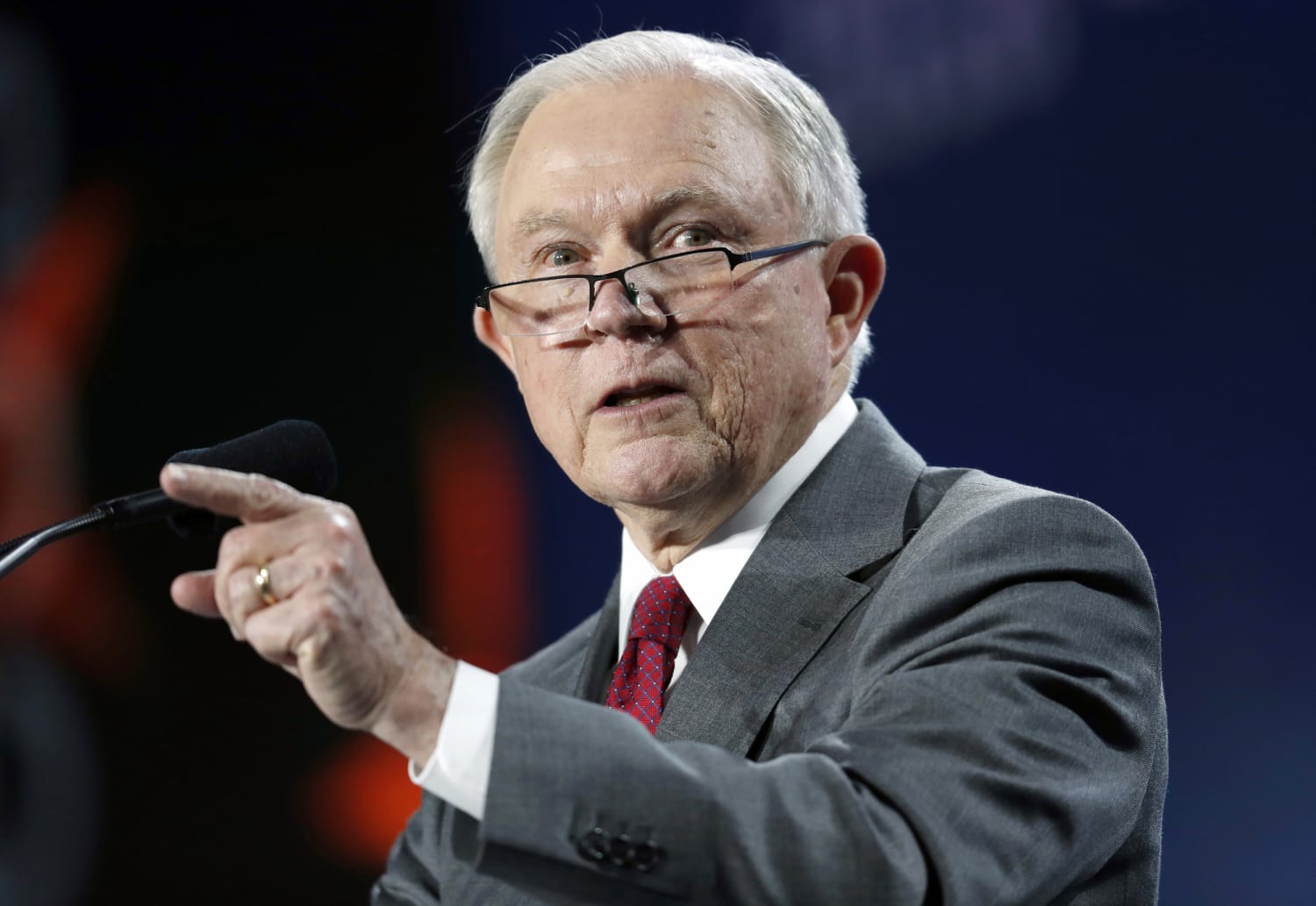
Image result for jeff sessions
Attorney General Jeff Sessions
“Colleges Are Creating ‘a Generation of Sanctimonious, Sensitive, Supercilious Snowflakes,’ Sessions Says.” Such is the headline for a story in the Chronicle of Higher Education [if the article is behind a paywall, you can access it via Curmie’s Facebook page] about remarks by Attorney General Jeff Sessions at a high school summit sponsored by the conservative group Turning Point USA, one of whose core “aims” is to “Effectively push back against intolerance and bias against conservatives in higher education.” Same old, same old, right?

Let’s face it, Jeff Sessions is one of the dimmer bulbs in the considerably less than brilliant firmament that is the Trump cabinet. No, he’s not the worst of the lot, but Curmie isn’t entirely certain that putting Godzilla in charge of HUD wouldn’t be one of the better appointments of this administration (he'd certainly be better than Ben Carson). And Mr. Sessions knows about as much about higher education as Curmie does about quantum mechanics: he knows that such a thing exists.

That said, it’s time to be fair. Sure, his speech was laden with what the Chronicle’s Chris Quintana calls “well-worn stereotypes,” and yes, there was the obligatory fluffing of Sessions’s boss, but whereas such sycophancy might be a little more de rigeur now than in previous administrations, all this stuff is pretty much boilerplate. Moreover, it’s curious that few on the right seem terribly concerned with the free speech rights of people who disagree with them. OK, fine.

But, unless he deviated significantly from his prepared script, his speech wasn’t all that bad. No, he didn’t handle the “lock her up” chant very well: he looked embarrassed and tried to say something non-committal rather than telling the assembled adolescents to shut up and move on, i.e., precisely what Trump’s supporters tell his political adversaries all the time. (To his credit, Sessions did note after the fact that he should have brought up presumption of innocence.  Not as good as saying it on the spot, but partial credit.)  Nor did he choose to moderate a perfectly good rant by recognizing that (for example) even wealthy colleges can’t afford to pay for security for the likes of professional assholes like Milo Yiannopoulos every time the College Republicans will chip in for his speaker’s fee. And he sort of conflates a judge’s decision not to throw out a lawsuit with ruling in favor of the plaintiff.

But he certainly didn’t complain about being “a persecuted conservative student in Alabama,” as Quintana would have us believe. Not even Jeff Sessions is stupid enough to claim that conservatives were an oppressed minority in 1960s Alabama. He said that he was one of a small group Republicans who opposed the likes of Democrats like George Wallace. (Sessions implies without saying outright that it was Wallace’s segregationist stance that led to Sessions’s opposition, thus avoiding an outrageous lie and merely misleading the audience in, shall we say, a Clintonesque manner.) This would have been in the nascent years of the Southern strategy, during which time racist white Democrats became racist white Republicans (e.g., Strom Thurmond) without missing a beat, but thereby reformulating the national (especially Electoral College) political calculus.

More to the point, he didn’t actually say that “colleges” (in general, per the headline) or “Many of the nation’s colleges” (per the article) are “creating and coddling ‘a generation of sanctimonious, sensitive, supercilious snowflakes.’” He said that “some schools are doing everything they can to create” such… erm… crystalline ephemeralities. "Some," not "most," and certainly not "all."  Like it or not, he’s right. Just look at the litany of examples he provides:
At Brown University, a speech to promote transgender rights was cancelled after students protested because a Jewish group cosponsored the lecture. Virginia Tech disinvited a conservative African American speaker because he had written on race issues and they worried about protests disrupting the event…. 
Through “trigger warnings” about “microaggressions,” cry closets, “safe spaces,” optional exams, therapy goats, and grade inflation, too many schools are coddling our young people and actively preventing them from scrutinizing the validity of their beliefs. That is the exact opposite of what they are supposed to do. 
After the 2016 election, for example, they held a “cry-in” at Cornell, they had therapy dogs on campus at the University of Kansas, and Play-dough and coloring books at the University of Michigan. Students at Tufts were encouraged to “draw about their feelings.”
These episodes, however isolated, are the stuff of headlines, and however well-intentioned their proponents may be, they're embarrassing: to the university, to progressive thought, and to education writ large.

In one of the last entries of my previous blogging persona, Curmie (then known as Mulcher4) extolled the “Virtues of Doubt”; that essay happened to have been about the murder of abortionist Dr. George Tiller, but the point was more universal. In that essay over nine years ago, I wrote, “Absolute self-confidence terrifies me, and not simply because my own neuroses are so manifest.” This is still true, even more so when that confidence/arrogance/hubris manifests in a post-adolescent.

Equally importantly, the very essence of education is to throw a lot of ideas into the ring and see which ones seem to fit the evidence. Recognizing the difference between fact and opinion matters. Free speech matters. This isn’t about simple politeness, which is generally a good thing, or about respecting others’ opinions, which is also generally a good thing. Nor is it about sitting in a circle and singing Kumbaya. It’s about fighting for the truth, not for a personal dictum that may or may not be grounded in rational thought. Above all, it’s a recognition that people who see the world differently aren’t inherently evil, and that what we see on that cave wall over there just might be a shadow instead of the full image.

Curmie identifies politically as a contrarian: whatever the political landscape in his area, he’s likely to be in opposition. After 17 years in East Texas, Curmie may be regarded as a lefty (and not merely because that’s the hand he writes with, although that’s also true: cue the Simon and Garfunkel, “communist ‘cause I’m left-handed, that’s the hand they use, well, never mind”), but plonk him down in Massachusetts and he might just move a little right-ward. More to the point, to quote myself from almost seven years ago, “alas, I must tell you that in my experience there have been more assaults on academic freedom and 1st amendment rights on campus from the left than the right.” This statement is, alas, more true now than it was then.

In case you hadn’t noticed, there are a lot more people on Curmie’s right than on his left, but if Curmie ever gets into trouble for having a big mouth or an over-active keyboard, I’ll bet you dollars to donuts it’s for not being sufficiently “progressive” or “inclusive” or otherwise orthodox in his liberalism… you know, for crimes like suggesting that men are allowed to have ethical objections to abortion, or that people who voted for somebody I didn’t aren’t (necessarily) evil, or that casting a white girl as Esmeralda in The Hunchback of Notre Dame falls a little short of burning a cross while wearing a white hood and robe.

A couple of other points to make in passing:
  • Curmie is a fan of both FIRE (the Foundation for Individual Rights in Education, mentioned with approbation in Sessions’s speech) and the ACLU for much the same reason: they care about the rights guaranteed by the 1st Amendment. FIRE is thought to be conservative, the ACLU to be liberal. But that’s only because their clients tend—by no means exclusively—to break that way. Not every case either organization takes up is necessarily worthy of the time and effort, but Curmie is grateful that both organizations exist.
  • It was interesting to note that Mr. Sessions doesn’t really address university curricula or faculty as part of his critique, concentrating instead on administrators, particularly in the student services area. Could this be the beginnings of a recognition on the part of the right that university faculty (and their colleagues in public education in primary and secondary schools) aren’t responsible for everything that has ever gone wrong in this country, from the kidnapping of the Lindbergh baby to the popularity of Nickelback? Nah, I didn’t think so. 
  •  Fox News whines predictably that the gathering of a few hundred high school kids from around the country to listen to a gaggle of partisan speakers doesn’t get enough press coverage. “Charlie Kirk, the 24-year-old founder of TPUSA, now in its sixth year, told Fox News that a similar event for young liberals ‘would be streamed everywhere... and it would be glorified as a wonderful organization,’ calling the media bias ‘blatant’ and ‘corrosive.’” Curmie would like an example—just one, please—of an event for liberal kids, or even, God forbid, for outstanding high school kids regardless of their politics or lack thereof (!) which has received even comparable coverage. Curmie is a patient man; he’ll wait. 
  • It does strike Curmie as a bit odd that a speech about free speech opportunities for all, and about the importance of engaging with “difficult or challenging ideas” should be delivered at an explicitly partisan gathering by an A.G. who is addressing them not really in his official capacity, and who was only one of a series of utterly like-minded speakers who fed them the same one-dimensional pabulum every day, all week. The message of the right is therefore just as hypocritical as that of the left: our side should have the right to express our opinions… and to stifle yours.
La la how the life goes on.

Sunday, June 25, 2017

Free Expression Matters: NJ.com Goes 2 for 2

A recent editorial on NJ.com, the on-line presence of a consortium of New Jersey newspapers including the (Newark) Star-Ledger (whose editorial board was responsible for the opinion piece in question) and the Times of Trenton, called attention to two cases of what they describe as “suppressing free speech in schools.” Both cases, Curmie was not surprised to learn, involve President Trump.

Liam Shea's graphics project.
One of the stories involves a Morristown High School student whose portrait of the President as a pig-snouted, hooved, semi-human holding a clearly very unhappy cat (“grabbing the pussy”?) in front of a burning American flag (or is that the sun?) was removed from a student art exhibit because, you know, there were complaints. In the other story, a yearbook advisor at Wall Township High School removed a quote from Mr. Trump from the profile of one student and had the photos of two other students airbrushed to remove Trump campaign logos and slogans. NJ.com gets it right: free speech trumps (ahem) other concerns. Let’s look at these stories in the order the editorial presents them.

Morristown junior Liam Shea actually had two pieces removed from his high school’s art and design show. One was the porcine presidential portrait that accompanies this blog piece; the other showed Mr. Trump on a missile, taking a selfie. The decision to remove the two items from the show was apparently made by Principal Mark Manning whom Shea quotes as saying, “I appreciate the risk you took, and it’s very well done … but other people weren’t too happy with this.” Manning, as cowards generally do, declined comment when contacted by the press.

Problem is, the Constitution doesn’t just go away when some local school official finds it inconvenient. (Here’s where Curmie notes that he is no Constitutional scholar, but, as a beloved mentor once told him in a discussion of whether Curmie had the requisite knowledge to teach a course on the periphery of his skill set, I know something, and I can read.) The “Tinker test,” named for the criteria established by the Supreme Court in their landmark Tinker v. Des Moines decision, remains the standard by which such cases must be administered. Here are a couple of snippets from that ruling:
First Amendment rights, applied in light of the special characteristics of the school environment, are available to teachers and students. It can hardly be argued that either students or teachers shed their constitutional rights to freedom of speech or expression at the schoolhouse gate….
In order for the State in the person of school officials to justify prohibition of a particular expression of opinion, it must be able to show that its action was caused by something more than a mere desire to avoid the discomfort and unpleasantness that always accompany an unpopular viewpoint. Certainly where there is no finding and no showing that engaging in the forbidden conduct would “materially and substantially interfere with the requirements of appropriate discipline in the operation of the school,” the prohibition cannot be sustained.
If Mr. Manning cannot maintain “appropriate discipline” because a high school kid created a graphics design that some folks don’t like, it’s time to step down.

Moreover, completely apart from the censorship being completely unexplained except as a sop to some unspecified someone’s tender sensibilities, the Trump portrait started as a class assignment to create a political cartoon! Curmie’s experience in the visual arts is somewhat limited, but he suspects that it is rather difficult to create a political cartoon that isn’t… erm… political. Shea’s mother says she thinks the image is clever rather than offensive. Curmie agrees. But here’s the key point: it doesn’t matter if Ms. Shea and Curmie are “right” or not about the aesthetic merit or indeed the intent of the work. It was chosen, presumably by an art teacher, to be included in the exhibition, and Mr. Manning capitulated to the complaints of a handful of whiners (Curmie thought it was lefties who are supposed to be the snowflakes) because he lacks an understanding of free expression, he has no backbone, or both.

The irony, of course, is that the graphic has now achieved far greater distribution and publicity than it possibly could have were it to have been treated as one hopes and trusts a similar editorial in the student newspaper would have been: essentially ignored. Young Mr. Shea himself understands that point very clearly. Interviewed by the local press, he burbled, “Me, I think it’s great. If it wasn’t taken down, I wouldn’t be talking to you!” And (of course) now that there’s some notoriety attached to the image, there’s talk of t-shirts sales and similar marketing. Ah, the entrepreneurial spirit! Donald Trump would be proud.

The politics of the Wall High case are different, of course. This time, it appears to be a left-leaning yearbook advisor who decided that supporting Donald Trump was a bridge too far in the whole “free expression” game. The key word in the preceding sentence, of course, is “appears,” as the teacher in question, Susan Parsons, has not—as far as Curmie can determine, at least—revealed her motives.

If we lived in a sane world, the fact that Ms. Parsons was suspended for her actions would tell us all we need to know about the story. We do not live in a sane world. We do know two things. First, the decision appears to have been made by the advisor, either with the tacit approval of student editors or, more likely, without their knowledge. Second, and significantly, there is nothing in the school’s policies that prohibits political expression on students’ clothing. The dress code is sexist, prudish, and a vestige of 1957, but whereas boys can’t have hair over the collar (seriously!), they can wear a t-shirt with writing on it to class, provided it meets some pretty basic standards (it isn’t lewd, doesn’t promote tobacco use, that kind of thing). Many schools would prohibit wearing a Trump campaign shirt (or a Clinton campaign shirt, or a Ragpicker for President shirt like the one Curmie’s production of The Madwoman of Chaillot used as a “show shirt” in the fall of 2012); this one doesn’t.

Wall High School junior Grant Berardo in his Trump shirt,
before and after the photo was adulterated.
Still, it’s a pretty stupid thing to wear—not because it’s a Trump shirt, but because this appears to be a semi-official school photograph, and wearing a t-shirt with writing on it (any writing on it) is really dressing down for the occasion. It would have been reasonable for Ms. Parsons, with or perhaps even without the input of upper administration, to insist (hypothetically) that for all personally submitted photographs (i.e., those taken by the yearbook staff) boys must be wearing shirt and tie, or that no legible writing appear, or whatever. 

Such a policy would be legitimate if and only if it was applied evenly (no Trump shirts means no Hillary shirts) and students had appropriate warnings that a specific submitted photograph would be altered (so that they’d have a chance to choose a different photo). This same strategy could have been employed by that Utah school a couple of years ago when school officials unilaterally and without warning covered those lust-inducing adolescent shoulders in a sloppy Photoshop job to protect us all from… well… something. The details here are different, but the essence is the same: most people will go along with even a stupid policy if you tell them what you’re doing and you give them the chance to make the problem at least a little less bad in their eyes.

None of that appears to have happened here. What’s worse is that the doctored photos aren’t even the most problematic element at play here. That dubious distinction would go to the decision to eliminate a Trump quote from the photo accompanying the freshman class president. Assuming that including such quotations is standard procedure for the yearbook, then striking the words of the President of the United States, no matter how wrong you think they are, no matter how insincere you think they are, no matter your opinion of the source: this is remarkably stupid behavior, and a suspension is indeed warranted.

The distinction is that whereas a Trump t-shirt could be considered inappropriate even if it didn’t violate the dress code, quotations abound in virtually every high school yearbook ever published, and eliminating one and only one such bromide without rationale or warning is just dumb.

The NJ.com editorial concludes thus: “Free expression for one requires free expression for all. That's true of the student in Wall, and the student in Morristown. And students everywhere must carefully weigh the lessons being taught in both places.” Well done, lads and lasses at NJ.com. Well done.