Monday, July 3, 2023

John Lyly, Aldous Huxley, and Student Loan Forgiveness

Curmie did his MA “by thesis” at an English university.  That is, there was no coursework involved, just a research project considerably longer than the thesis capstone to an American MA.  Curmie ended up writing about 47,000 words on the subject of “John Lyly and His Audience.” 

I hear you, Gentle Reader: “Who the hell is John Lyly?”  If you’re one of Curmie’s former theatre history students, he’s a little disappointed you didn’t at least recognize the name, but it’s perfectly forgivable if you don’t remember the context.  Lyly was the leading playwright who wrote primarily for the “boy companies” of late sixteenth-century England.  His career was ending as Shakespeare’s was beginning.

This MA project took place fortysomething years ago, and Curmie has returned to the topic only sparingly since then: I can’t be certain, but I strongly suspect that it’s been over four decades since I read any of his plays or any critical commentary on them.  I did watch a zoomed production of Gallathea and Phillida during the COVID times. 

That play is notable for its gender confusion, which makes it particularly interesting today.  The two title characters are attractive young women, played, of course, in the original production by pre-pubescent boys.  Both, like Rosalind in As You Like It and Viola in Twelfth Night a dozen or so years later, dress as men.  Neptune, you see, demands the sacrifice of the fairest virgin, so the fathers of two of the contenders for that now-dubious distinction dress them as men and send them off into the forest.  Just go with me here, Gentle Reader.

Lyly takes the bit even a step further than Shakespeare would, however, as Gallathea and Phillida meet and, both believing the other to be a man, fall mutually in love.  Of course, any kind of homosexual behavior could not be tolerated, so what to do?  Have Venus appear on the scene, of course.  The goddess of erotic love leads the two title characters off stage, promising to change one of them into a man so their marriage can proceed.  It’s a right-winger’s nightmare scenario: avoiding a lesbian relationship by the divine intervention of making one of the lovers trans! 

That same play, however, also points in the opposite direction in terms of today’s politics in the characters of Rafe the page and his brothers.  They try, and fail, repeatedly, to learn the skills required of various professions: mariner, alchemist, astronomer, etc.  The underlying message here is that people should know their place and not try to move above their station—upward mobility is not a thing to be countenanced in Elizabethan England.

The idea of staying in your own class works in the other direction, as well, in one of Lyly’s other plays, Alexander and Campaspe.  Here, Alexander the Great and the painter Apelles are both in love with the fair Campaspe.  Alexander could, of course, simply claim her as his own, but he has worlds to conquer, so he munificently gives her to Apelles (talk about a women’s studies article waiting to be written!).  The moment both reinforces the idea that class is important in both directions and, of course, parallels the Virgin Queen’s “marriage to England.”
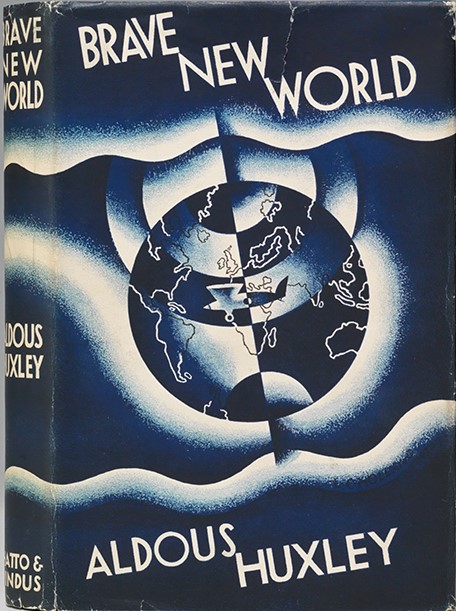
But perhaps Curmie is not alone in seeing here an anticipation of Aldous Huxley’s Brave New World, where the Betas rejoice that they are smarter than the Gammas but don’t have all those heady responsibilities required of the Alphas.  Curmie sees this being played out in the response to the recent SCOTUS ruling on student debt forgiveness.

There are two issues here: was President Biden’s plan just, and was it lawful?  Certainly those two terms are not interchangeable.  Curmie isn’t going to argue the latter consideration; he suspects that SCOTUS actually got it right in constitutional terms.  Nor is he going to suggest that Biden’s solution to the problem was the best option; he thinks it’s an over-reach.  But the impulse, the desire to at least reduce the financial and indeed emotional strain on literally millions of Americans, does not seem out of place, especially since the government cheerfully forgave close to a trillion dollars in PPP loans, mostly to people who didn’t need it.  Insert something about geese and ganders here.

Few of us have avoided misfortune or even injustice and betrayal in our lives.  There are two responses: “I went through it and came out okay [a dubious presumption to Curmie’s mind], so you can (and should), too,” or “That was awful, and I’ll do what I can to keep it from happening to you.”  Curmie need hardly mention which of these stances is adopted by the contemporary right.  This former perspective, of course, falls in the tradition of Paul Ryan, Clarence Thomas, and Rick Perry (to name but a few), as a variation on “I’ve got mine; you’re on your own.”

There are, to be sure, two variations on the theme: “I paid my way through college working summer jobs and waiting tables during the school year” and “I paid back my loans, so why shouldn’t these deadbeats?”.  Both tacks, of course, blithely ignore the reality that the world has changed.  

Some nine years ago, Curmie addressed this issue in a post entitled “Yes, A University Education Used to Be Affordable.”  Here are a couple of highlights: A student in 1978-79 who worked a full-time job for 13 weeks in the summer and 10 hours a week for 30 weeks during the school year, all at minimum wage, would make enough (before taxes) to pay 101% of total cost of attendance (not just tuition and fees) at in-state rates at the average 4-year state university. In 2011-12, that figure was down to 36.4%.

At the university from which Curmie recently retired, the average student loan debt at the end of four years would have been more than covered in 2011-12 if only two things had happened since ’78-’79: the minimum wage had kept pace with inflation, and state funding as a percentage of the university budget had remained the same. But neither of those things came close to transpiring.

Curmie promises (well, OK, maybe “hopes”) to update this piece in the near future, but suspects the situation has grown even more dire. 

The response from the right: “Well, lower your expectations, you not-rich student.  Forget about following your dreams and accept your lot.”  Curmie can’t speak for you, Gentle Reader, but Curmie heard all the way through elementary school and beyond about how one of the promises of the American Dream was upward mobility.  Now, the very people who were using that as an example of American Exceptionalism in Curmie’s youth are exposing it as a myth and actively seeking to quash the very idea that someone whose family has modest means might enter the workplace on firm financial footing (well, unless they’re 6’8” and have a good jump-shot).

If you, Gentle Reader, think this attitude sounds strikingly like “know your place, Betas,” you’re not wrong… but actually Huxley’s dystopian vision pales in comparison to 21st-century right-wing rhetoric.  At least the world inhabited by Bernard Marx delineated between the classes on the basis of their own skills and capabilities: the Alphas really were “better” than the Betas, who were “better” than the Gammas, etc.

What today’s right-wing pols and their adherents seek in this instance is not remotely merit-based, but founded solely on a student’s parents’ wealth.  Thus, the very people rejoicing at SCOTUS’s elimination of Affirmative Action, proclaiming that this will ensure that the best-qualified applicants will be accepted, are making damned sure that isn’t true: that spots, even at the most modest of four-year institutions, are reserved for those who can afford it.  There are, no doubt, tens of thousands of promising scholars—potential doctors, scientists, teachers, you name it—who, perhaps wisely, have decided not to take on the long-term debt associated with a college education.

It's also worth mentioning that these folks tend to think of business (of course) and the STEM disciplines as the only real courses of study.  Presumably this lessens the damage caused by the status quo because these graduates will be entering a lucrative field, so the repayments won’t be as crippling.  Curmie, who has not received a paycheck in the last half-century as other than an educator or theatre artist (oh… wait… there was that $75 honorarium from the county arts council fortysomething years ago), dares to suggest that there are professions requiring a college degree that are just as essential as marketing managers or plastic surgeons, but don’t pay as well.

Finding a way to encourage (or at least stop discouraging) the best candidates to move forward in their chosen profession helps us all.  If I, or someone I love, needs a doctor, I’d very much prefer that the physician in question is the one with the best aptitude for the job, not simply the best who had a rich Daddy.  Moreover, the money saved by loan recipients will actually stimulate the economy by being spent on goods and services, unlike tax breaks for billionaires, who just throw another few million bucks into their tax haven in the Caymans.

As you might guess, Gentle Reader, although Curmie is no fan of the Biden plan or of end runs around Congress, he’s more than a little pissed off at those who, having gotten their piece of the pie, show contempt for those who might also want a small morsel. 

Curmie comes by his name honest.

Sunday, June 25, 2023

On the Trans-cendent Hypocrisy of Elon Musk

Admit it: you didn’t really want to see
a picture of that smug bastard, did you?
No one who was actually paying attention ever really believed Elon Musk’s palaver about being a “first amendment absolutist.” That sounded good at the time, and it was indeed was Twitter needed; it just wasn’t who Musk ever was or ever will be. 

A few days after Musk announced that he was purchasing Twitter, Curmie wrote: 
Musk, of course, fancies himself as a sort of Nietzschean übermensch, so superior to us mere mortals that he cannot be expected to abide by quotidian standards of integrity, much less compassion or empathy. Curmie, equally obviously, views him as just another wealthy and petulant narcissist with delusions of grandeur. Oh, and an asshole of the first order; mustn’t forget that. 
Establishing appropriate boundaries for free expression on a site like Twitter is, of course, a monumental undertaking, requiring considerable deftness of touch. Allow it to become a free-for-all, and the slur-shouters will ultimately chase away everyone else. Clamp down too hard, especially in ways that could be perceived as favoring one point of view over another, and we get Pravda rather than truth. (See what I did there?) 

Curmie isn’t sure anyone could simultaneously complete the trifecta of taking an absolutist stand on free expression, eliminating spam, and curtailing the use of defamatory language, as Musk initially promised. But even if it is indeed possible, it’s clear that Musk isn’t the guy to do it: he lacks the intelligence, the capacity for nuance, or especially the humility to negotiate that minefield. He is, as Curmie suggested over a year ago, just “another boring and hedonistic super-rich guy…. longer on braggadocio than on ideas.” His claims that people on Twitter could even disparage him without repercussions lasted about a week. 

The Super Bowl provided us with two lasting images that are relevant to this discussion. First, there was the whole business of sharing a luxury box with Rupert Murdoch, an act which did little for either his non-partisan or anti-media credentials. Then there was the threat to fire Twitter engineers because his Super Bowl tweet generated fewer engagements than Joe Biden’s. It may be remotely possible that someone somewhere might someday be as absurdly wealthy as Elon Musk without being an insufferable narcissist, but it’s pretty damned unlikely. 

So, Gentle Reader, where is all this scaffolding going? This: the self-proclaimed absolutist on free expression has decided unilaterally to forbid the use of certain slurs on Twitter. Reasonable enough, yes? Except that the “slurs” in question are “cisgender” and “cis,” which are simply objective descriptors of people whose self-perception of gender aligns with their biological sex at birth. The term has been around for decades, although it is far more prevalent in common parlance today than in yesteryear. But that’s sort of the point: everyone knows what it means, and that it isn’t a slur, although some folks would like to pretend to be offended. And here I was, thinking it was the liberals who were “snowflakes.” 

Curmie, like most people, is cis. Indeed, there are few demographic descriptors that fit him as accurately. “Old”? I’ll accept that, although is 67 really old? “White”? Sure, mostly, but there’s about 3% Native American in there. “Left-handed”? Yes, for one-handed things (writing, throwing) but not for two-handed things (swinging a baseball bat or an axe). But “cis”? Yes, unequivocally. 

Some people, though, including a number of folks very dear to me, aren’t cis. That’s why the term has meaning, because “X” is meaningless unless there is a concomitant “not-X.” Perhaps, as has been argued by some folks, Curmie’s friends and family members who are trans or gender-fluid have something wrong with them. I don’t believe that for an instant, but I do not seek to stifle the expression of arguments with which I disagree. 

This would differentiate Curmie from both Elon Musk and James Esses, who has, to quote The Hill’s Sarah Fortinsky, “repeatedly expressed views that widely would be considered anti-trans.” Those posts, and, for example, misgendering and dead-naming trans people, are, of course, just dandy in Muskistan. But calling a cis guy “cis”? Ooh… but he doesn’t like it. In the words of Curmie’s then eight-year-old cousin, tough noogies. And Curmie will countenance deadnaming when conservatives are forbidden from calling Kid Rock anything but Bobby Ritchie. 

So let’s drop the act, Elon. Like so many other hypocrites—the “parental rights” crowd, for example—you have no interest whatsoever in free speech. Indeed, you’re unwilling to even fight governmental censorship the way your predecessors at Twitter did. You want to claim that you’re a First Amendment advocate, but really you just want to control the discussion and maximize your profits. Your fervor for free expression withers when someone actually says something you disagree with, especially if they’re demonstrably right, which would make you other than infallible. You are simply another fragile rich boy who stomps his feet when he doesn’t get literally everything he wants. Worst of all, you’re boring. Please go away.

Saturday, June 24, 2023

Curmie Contemplates Life as a Luddite

For years, Curmie has been saying, “Technology is a wonderful thing… when it works.” When it doesn’t work, of course, whatever the reason, our collective reliance on trustworthy internet and all the other devices and services that have become part of our daily lives becomes rather a problem. When the power goes out, we almost ignore the fact that our homes are, depending on the circumstances, freezing or stifling: we’ve got no internet, no TV, and no way to charge our Kindles! 
 
Usually, the root of the problem is an accident—a power line severed in a storm, or at worst a dumb mistake by some technician somewhere. There are minor frustrations born of stupidity, of course. A couple nights ago was the 30th anniversary of the passing of Curmie’s Mom, who was, among other things, a huge Agatha Christie fan. So Curmie and Beloved Spouse decided to stream an episode of one of the Christie series in commemoration. But where to find one? 
 
Our first thought was PBS. We have Passport (i.e., we’re PBS members), so we have access to a lot of stuff that appeared on Masterpiece or Mystery. And lo and behold! There were 30-second teases for several Miss Marple episodes… no episodes, mind you, we’d have to go somewhere else to see them! (Seriously, the PBS website is an absolute disaster.) 
 
Sometimes, however, the breakdowns are both more significant and of a more sinister nature. A few months ago, Curmie got a message from his online broker. (Question: what the hell kind of commie pinko weirdo has an online broker? Answer: the kind whose Social Security payments are barely a third of what his salary was.) They wanted to make sure that some activity in my account—setting up a bill payment plan, for example—was in fact my doing. It wasn’t. So now I have not only a password, but also a duo security token. It’s rather a pain in the ass, but it sure beats the alternative. 
 
Skip ahead to a couple of weeks ago, when Curmie’s university was the victim of a ransomware attack. The IT folks shut down everything, and I do mean everything, including, for example, copy machines that require a code. Most stuff is back a fortnight after the fact, but the university website is still down, and email is accessible only through ethernet connections on campus. About 12 days’ worth of incoming emails have apparently vanished into the ether, like ethics when you get appointed to SCOTUS. (Meow.) 
 
Such attacks were damned near ubiquitous. Curmie won’t bother to include all the links, but among the victims were Johns Hopkins University, the University of Georgia system, the Louisiana DMV, the BBC, British Airways, Ernst & Young, the California Public Employees Retirement System, and the US Department of Energy. And those are just the ones that have made headlines. Experts suggest that the number of victims probably runs into the hundreds. 
 
The Russian-based Cl0p ransomware syndicate exploited a vulnerability in the widely used MOVEIt software program, which was designed to allow large data files to be securely transmitted. Yeah, about that “securely” part… Progress Software, the corporation that makes MOVEIt, discovered the weakness and developed a patch, but too late. 
 
Note: there are sometimes advantages to not finishing a post on the day you start it, because now Curmie can tell you that it turns out that Curmie’s university was hit by a different international ransomware syndicate, Rhysida, so the administration’s claim that this event was unrelated to what we were reading about with respect to C10p is actually accurate. Who knew, right? No one is saying how Rhysida got into the system, but the university does use MOVEIt, so… 
 
Anyway, the tactics employed by C10p and Rhysida are a little different, so we’ll see how this all shakes out, both locally and internationally. Whatever it is, though, folks should consider themselves lucky if things don’t go from bad to worse.
 
And we move on to a couple of days ago, when Curmie got a notification that some of his information was showing up on the dark web. The internet security company Curmie uses said, among other things, to change the password for my personal email. So I attempted to do so. Oh, but the fact that I’m signed into my account isn’t good enough: I have to prove I’m me, and the only option to do that is to access my work email for a “code.” I can’t do that, of course, because of the ransomware incident just described. 
 
Oh, wait! There’s another option. I can use my cell phone… and wait 30 days. You can’t have both an alternate email and a phone number as backups, you see, because… well, because. (To be fair, Curmie understands at least part of the rationale… sort of… but that doesn’t make it less of a pain in the ass.) 
 
Anyway, my office email came back up, but at this point only by actually being in the office; off-campus accessibility is not yet a thing, at least for Curmie. So I could get a code. Except—you know what’s coming, Gentle Reader, don’t you?—it didn’t work. So now I have a presumably compromised email which I’m stuck with, at least for the present. Thanks, Big Tech! 
 
But wait! That’s not all! Last night, Curmie wanted to check something on the blog. He found that about 90% of the posts since April of 2021 no longer have images. There’s just an empty space with a cutline. Weird, yes? It gets worse. Curmie isn’t a fan of Chrome, but it has been what works the best from his house, so that’s what he used. On a whim, he tried again with Firefox, which is what he uses at the office. All those images: they’re right there. 
 
What makes this particularly ironic is that Chrome and Blogger are both Google products. They don’t want to work with each other, but other companies’ stuff is fine. This makes sense to someone, perhaps. I do not wish to meet this person. Of course, there’s no way to contact Google, or Microsoft, or Facebook, or whoever else and suggest that they make their product(s) actually work. 
 
Curmie understands that even his insignificant miniscule elite readership would disappear were it not for technology. But it’s sometimes tempting to think that perhaps the Luddites had it right.

Monday, June 19, 2023

Musings on the Elimination of DEI Offices in Texas State Universities

Curmie had coffee with a friend and former colleague last week. We talked about many things, including that our former employer’s website had been cyber-attacked over the weekend, leading to the very real possibility that email and other such services will be down for an extended period of time.
 

But he also asked me what I thought of the move by Governor Greg Abbott and his legislative majority to eliminate DEI (Diversity, Equity, and Inclusion) offices from all state colleges and universities, effective as January of 2024. I replied that I was ambivalent, thereby placing myself, no doubt, well to the political right of the majority of my friends in academe. 

Wait ‘til they find out that I don’t think the state’s new restrictions on tenure are particularly onerous, either! And yes, Curmie is well aware that Abbott and his acolytes (and future governors of either party and their minions) are more than likely to do everything in their power to abuse the new, (intentionally?) vague, rules; that doesn’t mean that habitually failing to show up for class or being convicted of a serious crime are insufficient reasons for having tenure revoked. Expressing a view contrary to those of the university president, regents, or state governor (or even calling them wanker bastards) had damned well better be protected by tenure, however. We shall see. 

There is no question in my mind that there is a purpose to be served by inclusivity, and not simply for reasons of political philosophy. Broadening horizons has direct benefits: by learning about others, you also learn about yourself, and exposure to different cultures and perspectives can only result in more mature analysis. Maybe that comes in the form of an argument that alters your view; maybe it’s something you consider but ultimately reject, secure in the knowledge that you’ve considered a different solution to a problem. 

One of Curmie’s first publications in a scholarly journal was an analysis of what plays are included in dramatic literature anthologies. It came as no surprise that the works thus canonized were overwhelmingly written by white males. What was a little more eye-opening was the fact that the disproportionality was greater when I was writing the article in the early 1990s than would have been true two or three generations earlier. 

This was a problem, not only in the classroom, but also because the implicit understanding that these were the superior works also led them to be produced more often, thereby exacerbating the imbalance. I don’t want to bother to look up the exact numbers, but I’d guess that of the first 75 shows my department produced after my arrival at the university from which I recently retired, only only four or five specifically required any non-white actors. I directed two of them, “Master Harold”… and the boys and Trojan Barbie. Another one, the musical Hair, actually had one of the “black boys” of the song played by a white guy in a wig and dark makeup. Ew. 

There were, of course, plenty of roles that could be, and indeed were, played by non-white actors. But I do not reject outright the argument that a BIPOC actor faces a different challenge to play a character written as white, even if there’s nothing specific about race in either the character’s description or action. There may not be a significant difference, but that doesn’t mean it doesn’t exist. 

As I told my friend, if you’re teaching a course in the history of the modern theatre (as I did for a couple dozen times overall) and you don’t talk about William Henry Brown, Ira Aldridge, Lorraine Hansberry, Douglas Turner Ward, et al., you’re not doing your job. But you’re also not doing your job if, all things being equal, you spend an entire class period on Suzan-Lori Parks and five minutes on Tennessee Williams. 

And here’s where my commentary veers rightward. That article about anthologies I mentioned earlier came as a follow-up to a conference paper for a panel I organized on theatre textbooks. One of the panelists I recruited for that panel was an editor at Random House. A year or so later, I got a letter (these were the Olden Times, pre-email) from a different editor at Random House asking me to comment on the prospective contents for a dramatic literature anthology they were considering publishing. 

These were the days when “diversity” was based more on gender than on race, so publishers were scurrying to find plays by women to include in their anthologies. So far, so good, right? This book was to include a play by Susanna Centlivre (if, Gentle Reader, you’re asking “Who?,” you have plenty of company) but to omit Molière. The problem here is not the inclusion of Centlivre (although Aphra Behn would have been a better choice, imho), but rather doing so while excluding arguably the greatest comic playwright in history. 

This collection was, in other words, a good idea—recognizing the fact that women like Hrotsvitha, Sophie Treadwell, Rachel Crothers, Lillian Hellman, Lorraine Hansberry, Caryl Churchill, and many others deserve to have their work read and appreciated. But that admirable intention gets lost in the silliness of Molière’s absence. 

Similarly, it is difficult if not impossible to argue that there is no place in a university curriculum for, say, Critical Race Theory. Just as you can’t claim to understand theatre history if you can’t string together a couple of sentences about Ira Aldridge or Amiri Baraka, you can’t claim to understand the political history of the nation without at least encountering the work of Ibram X. Kendi or (before there was something called CRT) James Baldwin. 

But here’s the thing: You shouldn’t have to agree with them. The idea that faculty should have to conform to the credo that not being racist is insufficient (you have to be actively anti-racist, and prove it) is no different from the loyalty oaths of past decades, except the authoritarian impulse now comes from the left instead of the right. Similarly, I don’t want someone (administrator, politician, whoever) who doesn’t know an onnagata from a verfremdungseffekt telling me, even indirectly, what is and is not important to cover in a theatre history course. 

I can’t decide which is worse, though: telling people like me, who actively sought out diverse perspectives on the theories, literature, and production of theatre long before it became de rigeur to do so, that we aren’t doing enough because we think Molière is vastly more important than Centlivre, or to insist that someone teaching, say, math or physics, which have literally nothing to do with sociocultural perspectives, prove their anti-racist bona fides or risk not getting the job or tenure or whatever. 

It is indeed possible that someone in my discipline really does exclude the study of people or ideas that should be there, but that should lead to a discussion with a department chair, not a sweeping indictment of a professor’s presumed prejudices. The Modern Drama course I took as an undergrad centered exclusively on white male playwrights. But it stopped chronologically around 1950, so Lorraine Hansberry was excluded on that basis. Caryl Churchill’s first really significant play was first produced literally as I was taking that course; August Wilson’s wasn’t even written yet. Maria Irene Fornes wasn’t unknown, but she hadn’t yet written any of the works that now come most immediately to mind. (And so on.) 

Also, we studied only Western dramatists who had written multiple significant works, so that took Sophie Treadwell out of the picture. Yes, one could make a case for Lillian Hellman, but probably the most important playwright we didn’t read was George Bernard Shaw… because the prof didn’t like his stuff.  Curmie isn’t a huge fan, either, although he didn’t know that at the time.

Should the domain have been different, to include a broader demographic spread of playwrights? Maybe. But not inherently so. The fact is that it wasn’t until about the time I started work on my PhD that the Western theatre world wasn’t in fact completely dominated by white men. That’s simply a statement of fact. Were there women or BIPOC authors, actors, directors, etc., who would have been at least as successful as the white guys in a fairer society? Almost certainly. But that more equitable world did not exist, and the dominant Western theatrical artists were who they were. Cultural literacy in the E.D. Hirsch sense may be a problematic configuration, but it’s not unreasonable to expect functioning adults to have a basic understanding of canonical figures and their works. 

The only consolation in all this is that the art itself survives. We are indeed finding out more about wonderful artists, scientists, and other professionals who didn’t (or don’t) fit the White Guy paradigm. That’s a good thing, and the same impulse to search for information about these often unfairly overlooked individuals that drives those new discoveries is also behind the establishment of DEI offices. 

Curmie has a friend, a former student, who has gone into the Student Affairs side of university life. He’s now a director of residence life or some such title at a small university. He recently wrote on his Facebook page that DEI offices “… can help first-generation students navigate college life, or help nontraditional students integrate into the campus culture, or even advocate for improved handicapped accommodations…. While they mainly support students from marginalized backgrounds, I've never known a DEI office that is purely exclusionary. As one professional I know said, ‘white students are part of diversity, too.’” 

Yeah, maybe, except for the part about not being exclusionary. But whereas all of those functions—working with first gen students, nontraditional students, handicapped students—are indeed valuable, they can be handled by other offices. How does Curmie know? Because they were before DEI offices existed, still are to a large degree, and thus will certainly be in the future if there’s no DEI office. 

But with the exception of being another layer of high-salaried administrators gobbling up salaries two or three times those of tenured faculty, the problem isn’t DEI offices per se. Besides, most of those people will be transformed into associate deans or something and do pretty much the same thing they’re doing now, only a little more under the radar. Greg Abbott knows that, so he’s doing little more than playing to his base. It’s an exercise in cynicism all around. What it isn’t is “forward-thinking legislation,” whatever State Senator Brandon Creighton, the bill’s sponsor, might think (or pretend to think). 

The problem, I hope obviously, is not that some people prioritize the promotion of the ideas of folks from a particular demographic or political perspective. Indeed, to the extent that such views challenge dominant paradigms, they generate conversations that are the very essence of what educational institutions ought to be about. It’s the expectation that literally everyone—faculty and students alike—must conform (or at least pretend to conform) to a particular philosophy. 

The gap between the left and the right has widened in recent years. We live, to coin a phrase, in a house divided against itself. I need hardly mention here that I find myself far more often on one side of the political schism than on the other, but the dominant forces on my side of the fissure demand absolute and unequivocal adherence to 100% of their ideology. (So do those on the other side, or I might be tempted to cross over.) 

A couple of years ago, when I was still teaching full-time, my department floated a proposal that would have demanded that all students and faculty in the program read a particular set of “anti-racist” books, in order (!). Curmie noted that it’s hard enough to get students to read the plays or textbooks we assign. Oh, and I called the proposal “Stalinistic.” I stand by that analysis. 

It was then, not when the university proposed a buy-out, that I first contemplated retirement. Actually retiring may have been a cowardly response, but I have no regrets. I’m note sure that academia is (yet) hopelessly corrupted, but in this place at this time, I’m happy to be emeritus. 

Side note: my friend told me that an editorial in the Dallas Morning News made essentially the same points I did, that DEI should be revised rather than eliminated. But it’s behind a paywall, so I’m just taking my friend’s word for it.

Friday, June 16, 2023

Strange Bedfellows: Socialism and Free Expression

From Roger Waters’s concert in Berlin
Reading Jack Marshall’s piece on Ethics Alarms about the Gallup poll that suggested an increase the percentage of Americans who self-identify as conservative, my first thought was, “so where do I fit in this model?”. 

There are so many variables: Curmie is quite liberal on some issues, staunchly conservative on others. I took a couple of those online quizzes: according to Pew, I’m “Ambivalent Right” (whatever that means); according to politicalpersonality.org, I’m a “Justice Warrior” (erm… no); ISideWith has me as a Green (I’m not, really, although I’ve been accused of worse). 

Moreover, such things are always relative: there’s no doubt that I’m well to the left of most people in my Congressional district, for example, but I’m a fair distance to the right of many of my colleagues in academic theatre. Moreover, times change. My once-radical position on gay rights, for example, is now rather mainstream: my belief system remained virtually unchanged, but it’s now no longer “very liberal,” and may even be “moderate.” 

Most importantly, distinguishing between left and right isn’t always the appropriate axis. Sometimes it’s the continuum from authoritarian to libertarian that really matters. Political Compass places me solidly to the left of center, but even further into libertarianism. 

In other words, my longtime assertion that, to quote the title of a piece I wrote a few months ago, “The Left and Right Both Hate Free Expression—They Just Do It Differently,” ought not to surprise us overmuch. What might is a casual observation I made while doing a little research for my second of my two posts on the Roger Waters controversy. 

Something clicked in my mind when I read a denunciation of the US State Department’s weighing in on the subject. An article entitled “Oppose the State Department’s slanders against Roger Waters!” appeared on… wait for it… The World Socialist Web Site, under the auspices of the International Committee of the Fourth International (ICFI). 

Given that site’s previous condemnation of “bourgeois politicians and the media” and the “shabby political elite” who denounced Waters’s concerts in Germany, this may be understandable. From the perspective of the WSWS, the opposition to Waters comes, in fact, from the right, because, as a WSWS review of the Detroit stop on the American tour argues, “Virtually every song is directed toward pressing issues of our time: imperialist war, fascism, the poison of nationalism, the plight of refugees, the victims of state oppression, global poverty, social inequality, the attack on democratic rights and the danger of nuclear annihilation.” 

The photo you see above suggests that the socialist defense of Waters may be founded at least in large part on political rather than free speech grounds. Were one of a cynical disposition (ahem), one might also suspect that such displays may also underlie the State Department’s intrusion into the kerfuffle. To be clear, every US President since Reagan was thus labelled: it’s not just Biden who got this treatment. 

So perhaps the socialists are defending Waters because they see him as one of them. Some of their rationale is, to say the least, rather strained, even to the eyes and ears of someone (like Curmie) more likely than the average person to see their argument in a positive light. That said, they are very specific that the attempt “to destroy Waters and intimidate other artists, performers and intellectuals from speaking out… is a desperate and systematic attack on freedom of speech and artistic expression.” Curmie agrees. 

More to the point, it doesn’t, or rather shouldn’t, matter if Waters is “right” about the issues. Do I think he’s absolutely accurate about some issues? Yes. About all issues? Hell, no. Is he antisemitic? I don’t think so. Is there any reason he ought not to be able to perform even if he were? No. 

What really caught my eye in all this was the fact that a Socialist organization was willing to take a stand for freedom of expression, but I can find no evidence that any other government official or political party has been willing to do so. There are politicians in the US, the UK, and Germany ready to condemn him for what I believe to be utterly imaginary offenses that tell us more about the spectator than the artist. But to the best of my knowledge, there’s not a single defense by any politician or political organization… except the Socialists. 

Anyway, I then recalled the case of Bright Sheng, the University of Michigan professor who got into hot water a couple of years ago for showing his class the Laurence Olivier film version of Othello.  

In that case, the Censorious Asshats (the usual hat-tip to Ken White of Popehat for the felicitous phrase) were clearly on the left, with the (alas!) usual genuflections to grad students (!) who were “hurt” by the incident. Eventually, sanctions against Professor Sheng were dropped, but the damage to his reputation was both undeniable and irrevocable. 

At the time, I’d either never seen the film in question or seen it so long ago I’d forgotten it. I watched it a couple of months ago, and no, I wouldn’t show it to students except if it were heavily contextualized… but not for the reasons that got Sheng into trouble. The casting of a white man in very dark makeup is a little unsettling at first, but what was really appalling was the Olivier himself was furniture-chewingly awful: bad enough that strong performances by Derek Jacobi as Cassio, Maggie Smith as Desdemona, and especially Frank Finlay as Iago weren’t enough to save the film from being, well, bad. 

This, of course, is only a matter of opinion and ultimately neither here nor there with respect to the Sheng case. What matters in the present circumstance pertains to the reaction to the brouhaha. Whereas commentators on such right-leaning sights as Newsmax and The National Review took up the cause, there was no uproar that I could find from politicians or mainstream parties of any description. 

You know who did write a scathing denunciation of the university’s violation of both academic freedom and First Amendment rights? Ah, you’re ahead of me here, aren’t you, Gentle Reader? That would be the International Youth and Students for Social Equality at the University of Michigan, whose self-description includes the following: “Equality is a fundamental right of humankind, denied almost universally to the people of this earth under the economic system of capitalism. While our organization encourages various means of promoting equality, our program aspires towards a socialist transformation of society.” 

The IYSSE (don’t make me try to pronounce that acronym) posted to (where else?) the WSWS page, arguing that “The actions taken against Professor Sheng… may well rank as the most shameful episode in the University’s history.” They argue further that the university’s initial capitulation to “poorly read, miseducated and disoriented students,” not Professor Sheng’s showing of the film, is what is helping to sanction “a thoroughly toxic environment on university campuses.” Those socialists aren’t pulling any punches! 

None of this is to suggest that socialists are universally champions of freedom of expression. Far from it, in fact. But at least we might start considering that other axis on Political Compass’s map. The libertarian streak missing from too many pols on the left and right alike seems not (yet?) to have been abandoned by self-identified socialists.  (Leftist Democrats are, of course, a different story.)  In these two instances, at least, they not only supported someone maligned for imaginary offenses that should have been protected speech under any circumstances, they were the only voices representing a political party (as opposed to being readily identified with such a party) to do so. 

That struck me as odd. Perhaps it shouldn’t have.

Note: This piece was originally intended to start as a guest post on Ethics Alarms.  Curmie's agreement with Jack Marshall, the host of that site, was that I was free to cross-post.  When, for a variety of reasons, the article didn’t appear there for a couple of days, I went ahead and posted here.  There are a couple of stylistic changes and a typo or two have been fixed, but the substance is what I sent to Jack.  Anyway, it’s now up on Ethics Alarms.  I mention this because that site has a far better track record than this one of engendering comments and debate.  If, Gentle Reader, you would like to join in that conversation, head there.  But I can’t foresee a scenario in which I would post something there and not here.

Sunday, June 11, 2023

Waters Redux: The State Department Over-Reaches

So, it’s time to follow up on Curmie’s piece on the controversy surrounding Roger Waters and his performances of “In the Flesh” in a series of concerts in Germany, where Nazi symbolism is forbidden except for educational or artistic purposes. There’s also an apparently still-ongoing investigation in Berlin regarding the charge of “incitement of the people,” a perhaps intentionally ill-defined regulation intended to protect against bullying and discrimination based on demographics, but often, inevitably, employed to quash any criticism of any group that seeks victimhood. 

A comment on Curmie’s post (thanks, jvb!) linked to an article about the US State Department taking a ridiculous and potentially disastrous action, not only weighing in on an issue outside its purview, but serving as yet another example of using the authority of government to restrict free expression if it has the slightest chance of giving offense, even to the hypersensitive. 

This latest episode in the ongoing saga was initiated by one Katharina von Schnurbein, who bears the impressive title of European Commission Coordinator on Combating Antisemitism and Fostering Jewish Life. Blithely ignoring a German court’s decision that Waters’s act may be “tasteless,” but not only must it be “viewed as a work of art,” it “did not glorify or relativise the crimes of the Nazis or identify with Nazi racist ideology,” von Schnurbein took to Twitter to accuse Waters of belittling and trivializing the Shoah. 

Taken out of context, the performance seen in the link above is indeed disturbing, even ominous. And von Schnurbein would have been a pre-teen when the film version (let alone the album) of “The Wall” was released, so she has something of an excuse for not recognizing the context. Nonetheless, it would have been a good idea to at least consider the fact that Waters is quoted as saying “the elements of my performance that have been questioned are quite clearly a statement in opposition to fascism, injustice, and bigotry in all its forms.” 

It is also true that Waters has said some fairly outrageous things about Jews over the years: the usual crap about cabals, Sheldon Adelson and George Soros as “puppet-masters,” and so on. But he later retracted much of that rhetoric, and the overwhelming majority of what has been labeled as antisemitic was in fact criticism of the Israeli state, specifically with respect to the treatment of Palestinians, not of Judaism or Jews. 

Waters’s projecting the name of Palestinian-American journalist Shireen Abu Akleh, believed to have been killed by an Israeli army sniper, alongside that of Anne Frank, has been interpreted as “comparing Israel to the Nazis.” Well, sort of. It might be worthy of mention that George Floyd’s appeared, too. What do these three people have in common? They were members of a disempowered demographic, killed by representatives of the government. Anything more than that is a reach, but I can find nothing to suggest Waters offered any further commentary. Is it is reasonable surmise that he was being deliberately provocative? Absolutely. Anti-Israel? Probably. Antisemitic? That’s a big stretch. 

Finally, of course, there’s von Schnurbein’s job title. There’s an adage that if your only tool is a hammer, everything looks like a nail. That saying’s first cousin is that if your job is to hammer things, you damned well better find some nails (stage whisper) even if there aren’t any real ones to find. 

Some of these explanations apply also to Deborah Lipstadt (although she’s old enough to remember the movie from its first run). Her title is the U.S. Special Envoy to Monitor and Combat Antisemitism, so that parallel to von Schnurbein tracks. But her re-tweet of her EU counterpart, complete with accusing Waters of “despicable Holocaust distortion” is more problematic for at least two reasons. 

First off, is she accusing Waters of distorting the Holocaust or of re-creating it too accurately? People who include the word “Ambassador” in their Twitter name really should show a little more facility with the language. Secondly, by using what appears to be a government account, she placed her bosses at the State Department in a no-win situation. They were inevitably going to be asked whether they supported her outburst. The least bad of their alternatives would have been to offer literally no comment, or to say something like “Ms. Lipstadt expressed her own views. The US government takes no official position on this matter.” 

But, of course, they opted to butt in, declaring in a statement not attributable to any specific individual (!) that Waters’s Berlin concert “contained imagery that is deeply offensive to Jewish people and minimized the Holocaust” and that “The artist in question has a long track record of using antisemitic tropes to denigrate Jewish people.” 

The Reuters article notes that “The department did not respond to follow up questions, including whether officials had viewed the concert and in what form, and did not give examples of Waters’ alleged use of antisemitic tropes.” Meow. 

An unidentified reporter at a subsequent press briefing pressed Principle Deputy Spokesperson Vedant Patel “to provide evidence of his past things and so on, the anti-Semitic tropes and so on? This seems to be an issue that every time there is a high-profile personality who comes out critical of Israel and in support of the Palestinians, he’s labeled as anti-Semitic.” 

Patel not only fails to do so, he proclaims that “When any officials have said hurtful, problematic, dangerous things as it relates to any community, when we’ve been asked about it we have spoken out clearly.” And here, Gentle Reader, Curmie reverts to a long-held belief: If you have to tell me, it ain’t so. This is a perfect opportunity to in fact speak out clearly, and Mr. Patel obfuscates instead. He’s either an idiot or a liar. (To be fair, any governmental spokesperson who tells the truth all the time will soon be a former governmental spokesperson.) 

Lastly, though not inconsequentially, what the hell business is it of the US State Department what a private English citizen does, especially if any response will likely enflame the situation? 

The key consideration here is that Waters’s performance is at worst ambiguous, at best anti-authoritarian and specifically antifascist. But those in power are perfectly willing to turn on even allies who disagree on the means to an end—just ask Danton or Trotsky. 

The State Department looks petulant in all this, especially in hurling what will be seen by many as scurrilous accusations against a celebrity figure openly critical of US foreign policy. The overriding concern ought to be that if you’re going to get out of your lane to smear someone, you bloody well better be certain of your facts. 

Von Schnurbein, Lipstadt, et al. could conceivably be right about Waters and his performance. But the mere fact that people like Curmie see things differently ought to give the State Department pause. It didn’t. Heads should roll for this. They won’t.

Saturday, June 3, 2023

Roger Waters, Pink, Nazis, and Freedom of Speech

There are lots of more important issues than Curmie’s topic du jour: the fact that we have even contemplated not raising the debt ceiling; Texas’s attempting to wrest the title of Most Embarrassing State from Florida (Tennessee is still in Honorable Mention territory despite their best efforts); further incursions on freedom of expression from authoritarians on the left, the right, and the simply megalomaniacal; well, you get the picture. 

A disturbing but not illegal image.
Curmie may or may not address one or more of these issues in the days ahead, but for now, let’s talk about former Pink Floyd composer-bassist-frontman Roger Waters, who ran afoul of German police for wearing a “Nazi-style uniform” (that’s
The Guardian’s term) at a recent concert in Berlin. 

Germany, for understandable reasons, is more than a little sensitive about anything suggestive of Nazism. They take their restrictions too far, in Curmie’s opinion, but what is, is. Any display of Nazi regalia is verboten; an exception is made “for educational purposes and in artistic contexts.” 

OK, but this isn’t Nazi regalia. It is clearly intended to be evocative, but there’s a difference between a swastika and the crossed hammers of the fictive world of “The Wall.” The latter, Waters’s creation, ranks alongside The Who’s “Tommy” as the greatest concept albums of the rock era, and is the best-selling double album of all time (yes, beating the Beatles’ White Album for that honor). 

The 1982 film version featuring Boomtown Rats frontman Bob Geldof as Pink, the lead, makes the plotline clearer than the album might. The song at the center of the controversy, ”In the Flesh,” appears in “The Wall” as a hallucination: in a fit of despair, Pink imagines himself as a Nazi-like demagogue. When the nightmarish visions subside, Pink screams “Stop!”, suggesting that not only does he recognize what has just transpired as an illusion, but that he wants no part of it. He continues that he wants “to go home / Take off this uniform / And leave the show / But I'm waiting in this cell / Because I have to know / Have I been guilty all this time?” This is not in the same area code as a rallying cry for Nazism. 

Officials in Frankfurt attempted to shut down Waters’s show there before it happened, accusing the singer-songwriter of being “one of the most widely known antisemites in the world.” They failed; Waters would have us believe that the decision was based primarily on the recognition that the Pink persona was a “scathing critique” of the Nazis. Taken out of the context of the entirety of “The Wall’s” plotline, this isn’t abundantly clear, but the court did determine that the performance “did not glorify or relativise the crimes of the Nazis or identify with Nazi racist ideology.” 

Even more importantly in Curmie’s mind, though perhaps not in the German authorities’, was the determination that the performance, in character, of a song from one of the seminal albums of the past half-century, must be “viewed as a work of art,” and therefore exempted from sanction, despite its “symbolism manifestly based on that of the National Socialist regime.” 

Of course, there are ethical concerns that extend past mere legalities. Waters has indeed, for many years, been accused of anti-Semitism, largely because of his pro-Palestinian stance. This allegation has historically been based on a conflation of Judaism and the Israeli government. It is perfectly possible to oppose the latter without bearing any animosity toward the former, and there is little to indicate that Waters is incapable of making the distinction. 

Still, there is a segment in the show that highlights the names of those killed by government authorities, thereby linking Anne Frank with Shireen Abu Akleh, described by the Guardian as “the Palestinian-American journalist who is believed to have been shot dead by an Israeli sniper in May 2022.” 

Israel’s UN Ambassador, Danny Danon, is correct that the linkage between Frank and “a journalist shot while in an active combat zone” is more than a little strained, but labeling Waters “disgracefully one of the biggest Jew haters of our time” is equally overblown. He’s a government official, so his willingness to ascribe a criticism of his government as inherently antisemitic is self-serving at best, and borders on proving Waters’s point about Israeli authoritarianism. Surely every American voter has complained in speech or print about some action of the current President or his predecessor; that doesn’t make us all unpatriotic. Neither does criticizing the Pope or an Ayatollah makes one anti-Catholic or anti-Islam. 

Waters does support the BDM (Boycott, Divestment and Sanctions) movement against Israel within the context of an “anti-war, anti-racist, anti-capitalist, anti-authoritarian, anti-establishment movement.” Again, criticizing the Israeli state isn’t inherently antisemitic. 

That said, an article on the Hot Air website declares that “Waters is secure in the belief that a Jewish ‘cabal’ runs the world. Conservative Jewish donor Sheldon Anderson (sic.), for instance, is a ‘fascist’ ‘puppet master’ who is ‘filling the coffers and pulling all the strings.’” (It is difficult to determine the sincerity of Waters’s subsequent apology for the remarks about Adelson in particular.) 

Waters is performing back in his native England now, and there’s apparently a fair amount of opposition to that series of concerts, as well. Jewish groups like the Board of Deputies of British Jews, the National Jewish Assembly, and the Campaign Against Antisemitism have, respectively, labeled Waters’s appearances as political rallies rather than concerts, called upon the government to condemn Waters, and launched a petition to stop venues from hosting his performances, both live and filmed. 

If Waters seeks to avoid controversy, he’s going about it all wrong. Certainly, opening his UK tour with a ten-minute screed about his mistreatment in Germany, a condemnation of the British newspapers The Telegraph and The Times, and challenging his doubters with “If you’re one of those ‘I love Pink Floyd but I can’t stand Roger’s politics’ people, you might do well to fuck off to the bar” is unlikely to tamp down any controversy. 

Waters is no stranger to the kind of whirlwind that now surrounds him, and those of a cynical disposition might suggest he likes it that way. It is not a criticism of Waters to note that the facts that he’s still performing the 44-year-old “In the Flesh” and that he hasn’t had a hit as a solo artist in over 30 years suggests that he’s living on past glory. In the spirit of “there’s no such thing as bad publicity,” then all this kerfuffle may well work to Waters’s advantage. 

Curmie grew up in the United States, where there’s a First Amendment that would (or at least should) guarantee Waters’s legal right to perform even potentially offensive material. Those rights are, as Curmie has suggested many times, currently under attack from both the left and the right, but to some extent it has been ever thus. 

I was just beginning to follow the news even a little when the Selma to Montgomery march took place in 1966; the first presidential election in which I took anything approaching an active interest was marred by the events at the Democratic convention in Chicago in 1968; I have long regarded Kent State in 1970 as a life-changing moment. None of these historical moments are shining examples of adherence to First Amendment principles. 

More recently, there have been abuses by police and protesters alike surrounding the invasion of Iraq, the tearing down of statues of Confederate leaders, the death of George Floyd, the Dobbs decision, and a host of other instances in which citizens responded negatively to something that was happening. 

No, these demonstrations were not without incident, but the spirit of peaceful protest remains, and Curmie will always regard the guarantees of the First Amendment as the most powerful beacon of American exceptionalism. 

Roger Waters, whatever we think of his music or his politics, would be on more solid legal footing on this side of the Atlantic. He should still be safe in Europe, but it’s important to note that some 52 anti-monarchists were arrested in his homeland for peacefully protesting the coronation of Charles III. 

Curmie also calls to mind a moment in his own life from 30-ish years ago. My cousin was coaching his son’s little league team. The players were just old enough to have an umpire call balls and strikes. I happened to be behind the bench when one of my cousin’s players was called out on strikes on a pitch I, too, thought was several inches high. The boy started to complain; my cousin pulled him aside and said that with two strikes, if it’s close enough that an umpire even might call it a strike, swing. The kid nodded, and rapped a double his next time up on a pitch that was a good six inches outside. 

Roger Waters might be right that what’s being thrown at him isn’t even close to the strike zone, but he needs to be aware that there’s always going to be an umpire (like this guy) who’s going to call you out just because. But coming out swinging isn’t exactly the answer, either. The best course of action would seem to be avoiding picking up two strikes. 

Controversy sells tickets, but there’s always a risk involved. Your call, Roger.

Wednesday, May 31, 2023

Authoritarianism and the GOP: One Example

This may or may not be a photo of Ron DeSantis 
responding to a question about how much he cares about
First Amendment guarantees.
This started as a comment, or to be more precise, a comment to a comment to a comment, on a post on Ethics Alarms. Curmie had taken issue with the idea, propounded in the original post, that no Democrat could legitimately call a Republican authoritarian. He was then challenged to support his position. Herewith, that argument, which has grown rather long for a blog post (even for Curmie), let alone for a comment. I’ll post the link to this post rather than clutter that page… and rather than writing a lengthy essay that doesn’t go on my own site. 

First point: let’s drop the nonsense about hearing about Republican authoritarianism “only by those who have no difficulty demanding that others bow to their desires.” I have no tolerance for slimy or authoritarian antics from the left, even if I (generally) agree with their goals. But arguing those shenanigans don’t also happen from the right suggests either willful blindness or mendacity. As I have suggested elsewhere, the tactics and targets are a little different; that’s all. 

Curmie could fill volumes with examples of Republican authoritarianism, but this is going to be long enough as it is; let’s choose one GOP pol and one topic: Ron DeSantis and education. 

We start with the decree a couple of years ago that all faculty and students at state universities must identify their political affiliation. Not only that, the forms were not anonymous. I could see some tortured logic by which tracking aggregate percentages of anonymous student responses might serve to prove “indoctrination” or whatever, but little could be less relevant than the political persuasions of faculty. 

I think in particular of two colleagues at the small midwestern college where I used to teach. A student couldn’t get a major in Political Science without taking at least a couple of courses apiece from the two of them. They were good friends who happened to disagree about which political party best represented the needs and desires of the citizenry. One was the county chair of the Republican party when I was there; the other ran for Congress as a Democrat a couple years after I left. Few students were unaware of their professors’ politics, but left-leaning and right-leaning students alike virtually unanimously sang the praises of both. That’s what is supposed to happen; more importantly, it’s what does happen far more often than not; it doesn’t make headlines because it is in fact so commonplace. 

Furthermore, as I wrote on my own blog, “Diversity of perspective doesn’t require hiring both liberals and conservatives; it requires faculty who know what the hell they’re doing. Curmie has taught plays that are very Catholic, very Jewish, very Buddhist, very Hindu, very atheist; he’s taught plays that advocate for monarchy, for democracy, for socialism, for capitalism, for anarchy. Do I really need to tell you, Gentle Reader, that I’m not an adherent to all of these philosophies?” 

Was this effort by DeSantis useless? Pretty much (but see below). Creepy? Absolutely. Authoritarian? Arguably, but not conclusively. 

So let’s move on to the “Don’t Say Gay” law. No, those words are never used in the bill. But the reality on the ground suggests serial repression. Literally every restriction of freedom of expression purports to be grounded in higher ideals. To some on the left, censorship is legitimized by resisting the spread of racism, homophobia, or sexism; to some on the right, it’s the need to promote American values or to protect children. 

To some degree, there’s validity in all of these points of view: those goals are admirable. There are, of course, places where certain kinds of dissent are inappropriate: think Fred Phelps protesting at military funerals, for example. But there is, and should be, a difference between that which is inappropriate and that which is illegal. 

More to the point: this particular legislation is (intentionally, I believe) so vague that virtually any action could be seen to be in violation. In the area of race, for example, Florida schools, inspired by DeSantis and his acolytes, have removed from school curricula or libraries books about Martin Luther King, Jr. and Rosa Parks, and a film about Ruby Bridges. It was enough that one (count ‘em, one!) mother complained that “It might suggest that white people hate black people.” (Guess what? They did.) Oh, also removed were books about baseball players Hank Aaron and Roberto Clemente. Make that make sense. (Yes, some of those books were subsequently restored to the shelves. That hardly legitimizes their initial removal.) 

A Florida teacher recently got into trouble for showing a Disney movie to her class. No one seems to dispute the fact that the actual plot of the film was relevant to what she was teaching. Ah, but the lead character appears to be gay. And according to the (il)logic of many on the right—some of whom have posted on Ethics Alarms—that makes it about sex, and we need to protect kids from the reality that gay people exist that. These folks may indeed truly believe that a romantic relationship between a man and a woman is based on love, but such a union between two men or two women is exclusively about sex. I don’t; indeed, I find it hypocritical at best, abhorrent at worst. 

Plus, of course, there’s the utterly irresponsible and indeed slanderous suggestion that simply recognizing gay people as human is “grooming.” If you’re really concerned about grooming, come back when you’ve cleaned up the Catholic Church. But, more to the immediate point, the words of a popular meme resonate: “Teaching kids about frogs isn’t grooming them to be amphibians.” 

I’d note further that whatever one may think of the propriety of same-sex marriage or the ability for such couples to adopt, one thing is irrefutable: it’s not little Johnny’s fault that he has two dads. Abusing him or even excluding him from the group, which is what denying his lived reality does, is reprehensible. 

But, as they say in the late-night infomercials, wait! That’s not all! It may be a flimsy argument to say you’re protecting kids from fill-in-the-blank bogeyman, but at least it’s an argument. DeSantis, though, wants similar restrictions at the university level, where “protecting children” rings rather hollower as an excuse for censorship. There, the awful scourge on society is Critical Race Theory, which must not even be mentioned in passing.  Seriously? 

Oh, and DeSantis also tried to restrict state university faculty from testifying as expert witnesses in lawsuits or criminal trials. This is the proponent of diversity of opinion? Give me a break. 

Authoritarian? I think unquestionably. 

There is also DeSantis’s attack on tenure. He’s not alone in this pursuit, of course; a fair number of other GOP pols are similarly opposed to what is, after all, nothing more or less than a pledge on the part of a university to respect the academic freedom of faculty who have demonstrated sufficient excellence in teaching, research, and service to merit this consideration. (There are practical benefits to the university, too, of course, but few politicians from either party are either smart or curious enough to know this.) 

By the way, there are a host of reasons for which tenure can be revoked: gross incompetence, moral turpitude, financial exigency resulting in the retrenching of a program, and so on. Two points: 1). the burden of proof now rests with the university: they must prove their claim rather than the professors’ having to prove they should be retained, and 2). a professor’s legal (i.e., not libelous, seditious, violence-inciting, etc.) commentary is never a legitimate reason to revoke tenure. 

But I’m still not done. There was the takeover of New College, including firing trustees and replacing them with DeSantis minions whose first action was to fire the president. DeSantis wanted to turn the school into the “Hillsdale of the South.” Of course, that’s a marketing slogan rather than an actual desire. Indeed, he wants the anti-Hillsdale. Hillsdale is, first of all, a private college, which would mean that DeSantis couldn’t appoint its trustees. And he wants that ability more than Pooh wants honey. 

Hillsdale is also libertarian rather than conservative. Yes, in the current environment, there’s a fair amount of overlap, but if there’s one thing libertarians definitely don’t want, it’s to have a college or university controlled by the governor’s office. It’s pretty clear that DeSantis isn’t interested in diversity of ideas, but rather to have his views and only his views propagated, and he wants the state to underwrite the operation. He’s not yet Joe Stalin, but give him time to grow a mustache and we’ll see… 

The purge at New College is unprecedented to the best of my knowledge. Yes, it’s true that there is a recent trend towards governors’ appointing trustees (regents, councilors, whatever a particular institution calls them) based primarily on political affiliation, but I can recall no instances of firing existing trustees without cause. 

And the new trustees really are indeed nothing more than DeSantis minions. More ominously, they are exercising a level of interference in the day-to-day operation of the college that is also unprecedented. It is exceedingly rare to have any tenure recommendation coming from the school administration overturned—it might happen once or twice a year in the entire country. The case involving Nikole Hannah-Jones and the University of North Carolina made headlines for precisely this reason: that such events occur so infrequently. 

Even then, especially for existing faculty rather than new hires, it’s generally because there is not merely disagreement but profound disagreement among the various levels of input into the decision: department committee, department chair, college committee, dean, provost, president. It is quite rare that the de facto decision is made above the dean level. 

To have the majority of faculty recommended for tenure by the president denied by the trustees is outrageous. I started teaching (and reading The Chronicle of Higher Education) in 1979, and I’ve literally never heard of more than one tenure applicant recommended by the president of a college being denied by the trustees at any single college or university in a single year. New College this year: five. 

Would it be too paranoid to wonder if that collection of political affiliations of faculty mentioned above had some hidden and nefarious intent? Much as I am loath to accuse even an ultra-partisan narcissist like Ron DeSantis of such a thing, I’m afraid I can’t rule out the possibility. 

It’s also important to realize that applying for tenure is almost always a one-time event: you either get it or you get a one-year terminal appointment. Those five professors, then, who demonstrated their legitimate claim to tenure to their colleagues and superiors, are now going to be out of work because a gaggle of political hacks decided that obeisance to Ron DeSantis was more important than the good of the university they were pledged to support. 

As a longtime professor and a free speech advocate, I believe DeSantis’s actions with respect to New College are an abomination. You’re free to disagree with that assessment, Gentle Reader; it is, after all, only an opinion. Perhaps you think he was simply righting a wrong. But to suggest that his power play was anything less than authoritarian means our discussion is over, as I will simply label you incorrigible and move on.